

























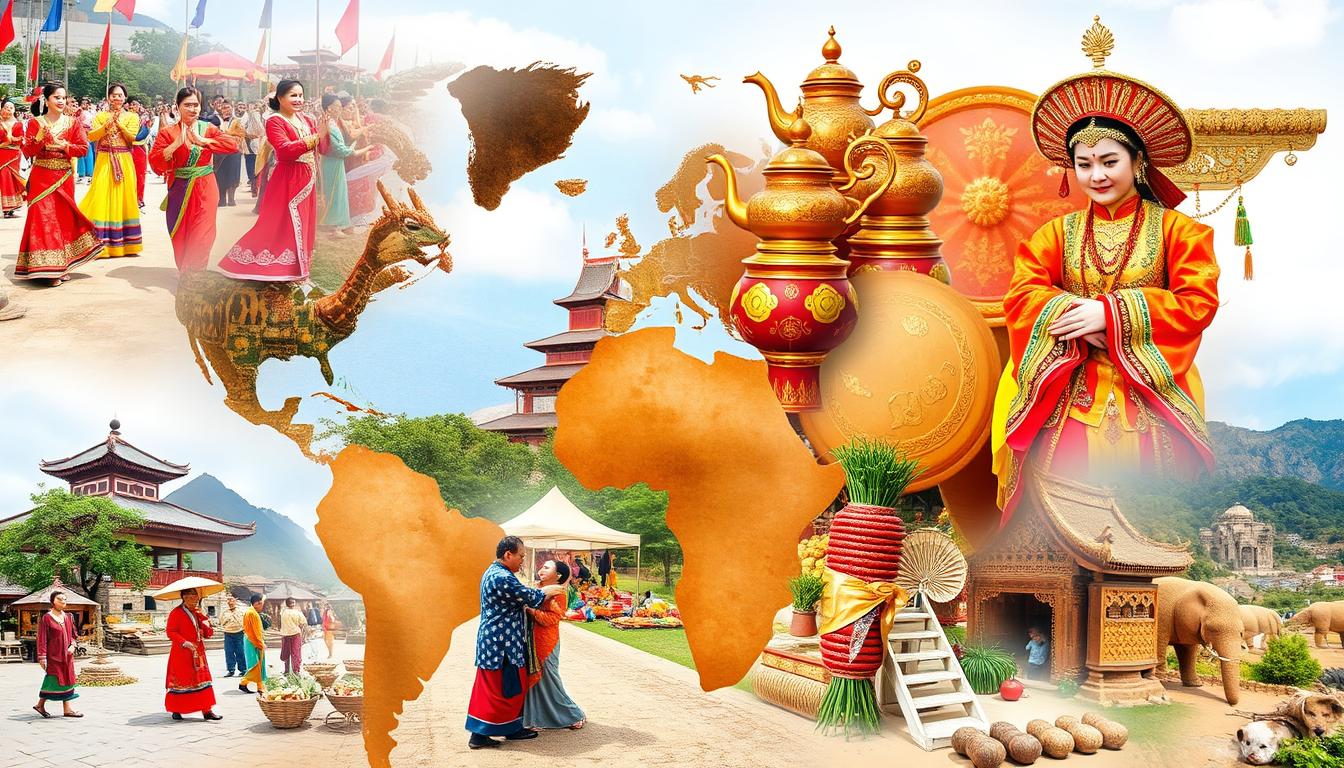
Across the globe, diverse cultures have given rise to an array of captivating traditions. These traditions offer a unique glimpse into the richness of human heritage. From intricate wedding ceremonies to vibrant festival celebrations, these customs reflect the deeply ingrained values, beliefs, and identities of various communities.
In this article, we’ll explore ten surprising Cultural Traditions. They showcase the incredible diversity of our world.
Key Takeaways
- Discover the fascinating diversity of global Cultural Traditions.
- Gain insights into the significance and meanings behind unique customs and practices.
- Explore the role of traditions in shaping cultural identity and community.
- Appreciate the beauty and significance of traditional rituals, celebrations, and celebrations.
- Understand how Cultural Traditions are being preserved and celebrated in the modern world.
The Significance of Cultural Traditions
Cultural traditions are the heart of our societies. They shape our values, beliefs, and identities. Passed down through generations, they connect our past and present. These traditions are more than just rituals; they are the base of our communities.
What are Cultural Traditions?
Cultural traditions include many practices, like how we celebrate and what we eat. They show the diversity and richness of human life. These traditions grow and change, yet keep their core spirit.
Why Traditions Matter
- Preserving cultural identity: Traditions define a group’s identity, giving a sense of belonging and pride.
- Passing on knowledge and values: They help pass down important knowledge, skills, and values to future generations.
- Strengthening community bonds: Shared traditions unite people, building social cohesion and a collective identity.
- Promoting heritage and diversity: Celebrating traditions preserves human heritage and diversity, vital in a global world.
In today’s fast-changing world, keeping cultural traditions alive is crucial. By celebrating our unique cultural identities, we ensure the richness of human experience continues to grow. This enriches our lives and those of future generations.
“Traditions are the guideposts driven deep into our subconscious minds. The most important influence on behavior, they create the template against which everything else is measured.” – Alex Haley
Unusual Wedding Customs
Weddings are more than just celebrations of love. They are also a showcase of cultural rituals and customs. Around the world, we find unique wedding traditions that highlight human diversity. Let’s explore some remarkable examples.
The Japanese Wedding ‘Shinto’ Ceremony
In Japan, the Shinto wedding is a blend of ancient rituals and seriousness. The bride wears a traditional white kimono, showing purity. The groom wears a black suit, showing respect. They share sake, starting their life together.
They also exchange gifts and make vows. These actions highlight the ceremony’s deep cultural value.
India’s Saptapadi Ritual
The Saptapadi ritual in India is a beautiful display of love. The couple walks seven steps around a holy fire. Each step is a vow, from support to lifelong companionship.
This ritual is believed to bind the couple for life, with the fire god’s blessing.
Unique Gifts from Different Cultures
- In China, a golden jewelry set, or ‘Harmony Set,’ is given. It symbolizes the couple’s harmony and wealth.
- In Nigeria, a kolanut is given. It shows the couple’s promise to be hospitable and generous.
- In Iceland, the claddagh ring is a popular gift. It stands for love, loyalty, and friendship.
These examples show the unique customs and traditions of weddings worldwide. Each ritual and gift reflects the culture of its people. They offer a peek into the rich tapestry of human experience.

Quirky Festivals and Celebrations
Around the world, diverse Cultural Traditions and Traditional Festivals show the vibrant Folklore of different cultures. From Spain’s La Tomatina to China’s Harbin Ice Festival, these quirky celebrations capture our imagination. They bring communities together in unique and joyful ways.
La Tomatina in Spain
In the small town of Buñol, Spain, La Tomatina is a riot of red. Thousands gather for the world’s largest tomato fight. They toss ripe, juicy tomatoes at each other. This festival, starting in the 1940s, symbolizes Spain’s exuberant Cultural Traditions.
The Harbin Ice Festival in China
In China’s cold northeast, the Harbin Ice Festival turns the city into a winter wonderland. Towering sculptures carved from ice and snow decorate the landscape. Visitors from around the world come to see these stunning icy creations.
Holi, the Festival of Colors
India’s Holi is a celebration of good over evil. Each spring, people paint the streets with colors. They throw colored powder and water at each other in joy. Holi shows the essence of Cultural Traditions and the spirit of Folklore.
“Holi is not just a festival of colors, but a celebration of life, love, and the triumph of good over evil.”
Surprising Dining Etiquette
Dining etiquette varies a lot across cultures. It shows the rich diversity of Customs, Cultural Traditions, and Ethnic Identity worldwide. For example, in Ethiopia, people eat with their hands. In Japan, it’s important to be silent while eating.
Eating with Hands in Ethiopia
In Ethiopia, eating with hands is the traditional way. This custom, called gursha, is a big part of their culture. It shows love and respect when people feed each other with their right hands.
The Importance of Silence During Meals in Japan
In Japan, eating is a quiet, focused experience. It’s about enjoying the food’s taste and texture. Before or after eating, people talk. This lets them fully enjoy their meal.
Tipping Customs Around the World
- In the United States, tipping is expected and typically ranges from 15-20% of the total bill.
- In Japan, tipping is not a common practice, and it may even be considered rude or disrespectful.
- In many European countries, such as France and Italy, tipping is not mandatory, but a small gratuity of around 5-10% is often appreciated.
- In some Middle Eastern and Asian countries, tipping is not a widespread Customs, and the service charge is usually included in the bill.
Tipping customs vary worldwide. They show the different Cultural Traditions and Ethnic Identities that shape how we dine.

“Sharing a meal is not just about nourishing the body, but also about nourishing the soul and strengthening the bonds of community.”
Unique Ways of Greeting
Customs and cultural traditions shape how we meet each other. Around the world, different greeting practices exist. These range from casual to formal, showing deep heritage and social norms.
The Maori Hongi in New Zealand
In New Zealand, the Maori greeting, the Hongi, is unique. It involves pressing noses together, sharing breath. This act means sharing spirits and forming a strong bond.
The French Cheek Kiss
The French custom of la bise, or cheek kissing, is known worldwide. The number of kisses varies, from one to five. It shows the value of social etiquette and personal space in French culture.
Bowing in South Korea
In South Korea, bowing is a key custom. The depth and length of the bow show respect and hierarchy. It reflects Korean heritage and Confucian values.
These greeting practices highlight the diversity of cultural traditions. They offer a glimpse into the heritage and social norms of different places. Understanding these customs can help us connect better across cultures.
Festive Apparel and Costumes
Clothing is key in keeping cultural traditions and heritage alive worldwide. From India’s colorful festivals to Germany’s Oktoberfest, clothes show off cultural identity.
The Colorful Attire of Diwali in India
Diwali, the Festival of Lights, is a big celebration in India. People wear their best traditional clothing during this time. Women wear saris in bright colors like red, gold, and green.
Men wear kurtas and dhotis to match the festive mood. This shows off their cultural traditions.
Traditional Dress at Oktoberfest in Germany
Oktoberfest in Munich, Germany, is famous for its traditional attire. People wear Bavarian dirndl and lederhosen. These outfits are a big part of Oktoberfest.
The dirndl and lederhosen show off the region’s heritage and cultural traditions.
The Kimono in Japanese Culture
In Japan, the kimono is very important. It’s a long robe with beautiful designs. It’s worn at important events and festivals.
The kimono means a lot more than just its looks. It shows Japan’s deep traditions and values.
These examples show how festive apparel and costumes connect people to their culture. They help people feel part of their community.

Interesting Religious Practices
The world is full of different cultures, each with its own religious practices. From the colorful celebrations of Hinduism to the quiet observances of Ramadan, these practices show the rich diversity of human spirituality. Let’s look at three interesting examples from around the globe.
Unique Rituals in Hinduism
Hinduism is one of the oldest religions, known for its complex rituals. The “puja” is a ceremony where people offer flowers, incense, and other items to deities. They do this to seek blessings and guidance.
Another interesting ritual is the “aarti.” In this ritual, people wave lamps or candles in a circle. It symbolizes the divine’s light.
The Day of the Dead in Mexico
In Mexico, the Día de los Muertos is a colorful tradition. It honors the lives of those who have passed away. Families visit cemeteries, decorate graves, and offer their loved ones’ favorite foods and drinks.
The festival is filled with colorful costumes, music, and the belief that spirits return. It’s a time of joy and remembrance.
Ramadan Fasting Customs
- Ramadan is a sacred month in the Islamic calendar. Muslims fast from dawn to dusk during this time.
- The fast is a spiritual practice that teaches self-discipline, compassion, and connection with the divine.
- During Ramadan, Muslims abstain from eating, drinking, and desires. They focus on prayer, reflection, and charity.
- The fast is broken with a communal meal called “iftar.” Families and communities come together to share food and celebrate.
These examples show the fascinating diversity of religious practices worldwide. Each tradition offers a unique glimpse into the cultural rituals, ancestral practices, and cultural traditions that shape us.
“The diversity of the world’s religions and their cultural traditions is one of the greatest gifts we have as a species.”
Cultural Importance of Music and Dance
Music and dance are key to keeping cultural heritage alive worldwide. From Flamenco in Spain to African drumming, they express a community’s identity and folklore. These art forms are powerful.
The Flamenco in Spain
The Flamenco dance comes from southern Spain. It’s a passionate dance with complex footwork and emotional gestures. It celebrates Spain’s rich history and cultural traditions.
The Flamenco mixes Romani, Moorish, and Andalusian styles. This makes it a true celebration of Spain’s heritage.
Traditional African Drumming
In Africa, drumming is sacred and brings people together. The beats of traditional drums express music and preserve cultural traditions and folklore. Drums are used in ceremonies, uniting people through shared heritage.
The Hula Dance in Hawaii
The Hula dance is a big part of Hawaiian culture. It’s a graceful dance with detailed hand movements and hip sways. It tells stories and preserves Hawaiian folklore and history.
“Music and dance are the heartbeat of a culture, connecting us to our roots and preserving the rich tapestry of our collective heritage.”
Special Customs Around Birth
The birth of a new baby is a big deal, celebrated in many ways around the world. From the cultural traditions and ancestral practices to the symbolic gifts, these customs show how different societies welcome new life.
The ‘Naming Ceremony’ in Ethiopia
In Ethiopia, the naming ceremony is very important. It happens soon after a baby is born. The name chosen often reflects the family’s history, values, or hopes for the baby’s future. The ceremony includes prayers and blessings, welcoming the baby into their community.
The Chinese ‘Full Month’ Celebration
In China, the Full Month celebration is a big deal. It marks a baby’s first month of life. During this time, the baby gets symbolic gifts like red eggs and longevity noodles. These gifts wish the baby prosperity and good health. Family and friends come together to celebrate the baby’s arrival.
Symbolic Gifts for Newborns in Various Cultures
- In Native American tribes, the gifting of a cradleboard symbolizes the protection and nurturing of the child.
- In India, the silver spoon is a cherished gift, believed to bring wealth and success to the newborn.
- In Japan, the omamori amulet is often given to provide the baby with good luck and spiritual guidance.
These cultural traditions and ancestral practices show the importance of welcoming a new life. They connect generations in diverse societies.
“The way we welcome a child into the world reflects the very essence of our culture and values.”
Preserving Cultural Traditions Today
In today’s fast-changing world, keeping cultural traditions alive is more important than ever. Museums and cultural centers are key in protecting the rich heritage of different communities. They showcase traditional art, artifacts, and practices, making sure our diverse human history is preserved.
The Role of Museums and Cultural Centers
Museums worldwide are leading the way in saving cultural traditions. They carefully select items for their collections, run educational programs, and create immersive experiences. This helps visitors feel amazed and connected. They also give indigenous communities a chance to share their stories and traditions, helping people understand and value cultural diversity.
Communities Keeping Traditions Alive
People all over the world are working hard to keep their cultural traditions alive. They pass on artistic skills, hold annual festivals, and more. These efforts keep their heritage’s spirit alive. By teaching the next generation, communities link the past to the present, giving them a sense of identity and pride.
Globalization and Its Impact on Traditions
Globalization has brought both good and bad for cultural traditions. It has made it easier to share and learn from different cultures. But, it also worries about losing unique traditions. Yet, many communities are finding ways to keep their traditions fresh while still being part of the global world.