


























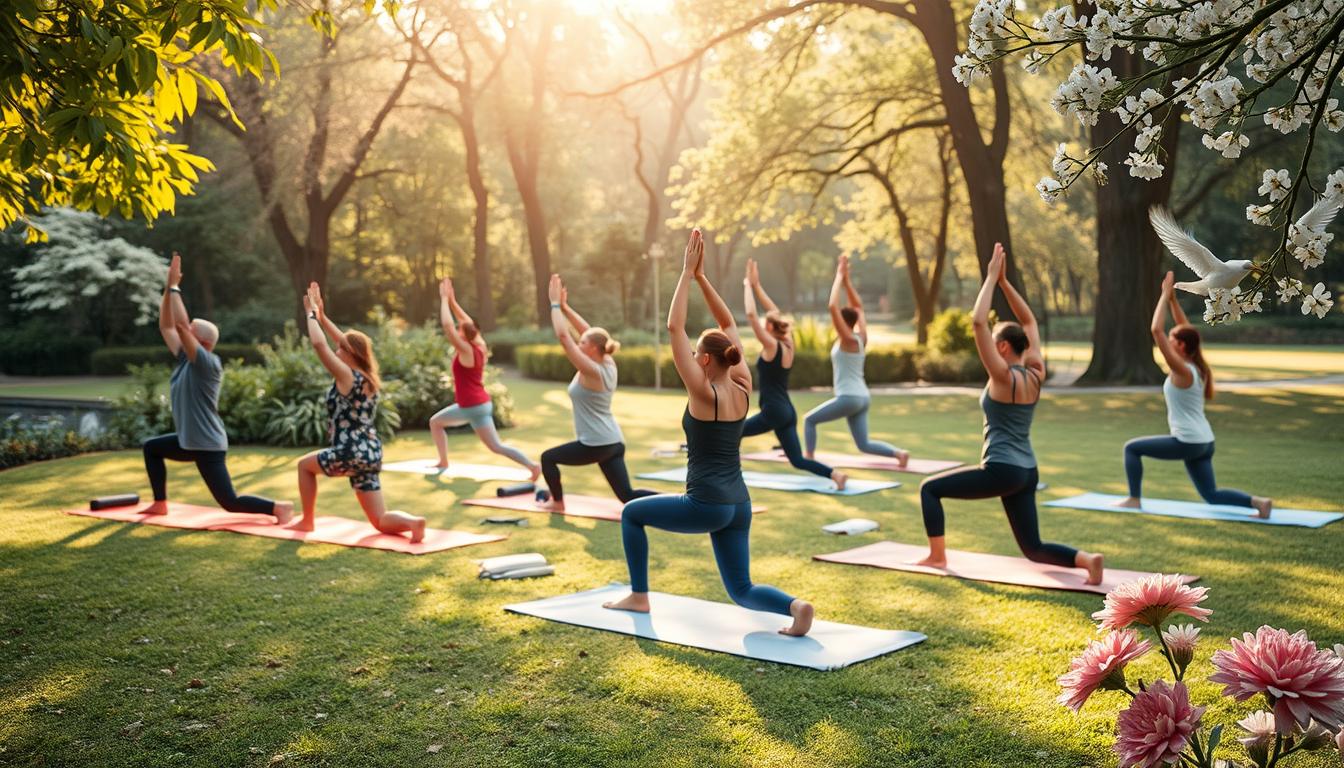
Yoga is known for making us more flexible. But it does so much more than that. It’s a way to improve both physical fitness and mental wellness. Let’s dive into the surprising benefits of yoga that go beyond just being more flexible.
Being more flexible is just one of the many perks of yoga. The real magic happens when it balances our body and mind. By following yoga’s core principles, we can enjoy many benefits. These benefits improve our physical health, mental well-being, and our overall life quality.
Understanding the Core Principles of Yoga
Yoga is more than just physical poses. It’s a journey that connects our body, mind, and spirit. It helps us find ourselves through Mindfulness Meditation, Body Awareness, and Spiritual Growth. By exploring yoga’s core, we discover its deep benefits, not just physical flexibility.
What is Yoga?
Yoga started in ancient India and has grown over thousands of years. It’s not just about poses, but a complete system. It includes breath control, meditation, and ethical living. Yoga aims to balance our body, mind, and spirit for overall well-being.
Key Practices in Yoga
Yoga’s main practices are physical poses, or asanas, to improve flexibility and strength. Pranayama, or controlled breathing, helps manage energy flow. Meditation, or dhyana, helps us stay present and find peace.
The Philosophy of Yoga
The philosophy of yoga is deep and rich. The Yoga Sutras by Patanjali outline eight limbs of yoga. These include ethics, self-discipline, and reaching higher consciousness. This philosophy helps us connect with our inner selves and the world.

Understanding yoga’s core principles opens a transformative journey. It unlocks yoga’s true power to improve our well-being. This includes Mindfulness Meditation, Body Awareness, and Spiritual Growth.
Mental Health Benefits of Yoga
Yoga is more than just stretching. It deeply benefits our mental health. It helps reduce stress and anxiety, boosts mood, and improves focus. Yoga combines deep breathing, mindfulness, and gentle movements to bring calm and clarity.
Reducing Stress and Anxiety
Yoga’s deep breathing and meditation lower stress hormones. It activates the parasympathetic nervous system. This leads to relaxation, reducing anxiety and promoting Stress Relief.
Enhancing Mood and Emotional Well-being
Yoga goes beyond stress relief. It boosts mood by increasing serotonin and dopamine. It also helps with self-awareness and self-acceptance, improving emotional well-being.
Improving Focus and Concentration
Yoga’s Breath Control Techniques improve focus. By focusing on breathing and body sensations, we enhance concentration. This mental clarity benefits our daily lives.

Physical Health Advantages of Yoga
Yoga is known for improving flexibility, but it also offers many other physical health benefits. It can help build strength, endurance, balance, and coordination. These benefits can greatly improve your overall fitness.
Building Strength and Endurance
Yoga poses like plank, warrior, and arm balances work many muscles at once. This leads to stronger muscles and better endurance. Practicing these poses helps build a strong body that supports your daily activities.
Enhancing Balance and Coordination
Yoga focuses on being aware of your body and moving mindfully. This improves balance and coordination. Poses like tree pose and standing balance help with stability and reduce the risk of falls or injuries.
By adding physical fitness, flexibility training, and body awareness to your yoga, you can enjoy many benefits. You’ll move more easily, stably, and with more resilience in your daily life.

Yoga for Chronic Pain Relief
Yoga is a powerful tool for those with chronic pain. It uses gentle movements and postures to help manage back pain and joint discomfort. Regular yoga practice improves body awareness and physical fitness, helping prevent injuries.
Managing Back Pain
Yoga is great for back pain. It strengthens the back and reduces strain. Deep breathing and relaxation in yoga also help release tension and improve posture.
Alleviating Joint Pain
Yoga helps with joint pain too. It focuses on improving joint mobility and muscle strength. Gentle poses can reduce inflammation and enhance joint health.
Yoga is a complete solution for chronic pain. It addresses physical and mental aspects of pain. This leads to a healthier, more resilient lifestyle.
The Role of Yoga in Enhancing Sleep
Getting quality sleep is key for our health, but many of us face insomnia and restless nights. Yoga can help. It connects Stress Relief, Mental Wellness, and Breath Control Techniques for better sleep.
Techniques for Better Sleep
Yoga calms the mind and soothes the body. Deep breathing and gentle poses activate the “rest and digest” system. This reduces stress and anxiety, common causes of insomnia.
Yoga Poses for Insomnia
Poses like Legs-Up-the-Wall, Corpse Pose, and Restorative Twists are great for sleep. They release tension, calm the mind, and bring peace. Adding these to your evening routine can lead to deep, restful sleep.

Social Connections Through Yoga
Yoga is more than just for your mind and spirit. It’s also a way to make friends and feel part of a community. When you join a yoga class, you meet people who love yoga as much as you do.
Building Community in Classes
Yoga studios are places where people come together. They support and encourage each other. This creates a sense of belonging and helps everyone grow.
Being in a group makes yoga more fun. You learn from others and get inspired. This helps you stay motivated and keep practicing.
Benefits of Group Practice
Yoga with others has many benefits. It pushes you to try new things and be your best. You also get to stay on track with your yoga routine.
Yoga can even lead to new friendships and hobbies. Feeling connected to others improves your mental health and spiritual growth.
Yoga and Mindfulness
Yoga is more than just physical exercise. It connects us deeply to the present moment. Through mindfulness, yoga boosts our mental health. Mindfulness Meditation, a key part of yoga, helps us live in the now, finding peace and self-awareness.
Cultivating Present-Moment Awareness
Yoga’s breath control techniques keep us grounded in the present. As we move through poses, our breathing becomes our focus. This lets go of worries and brings us fully into the moment.
This awareness improves our mental health. It lowers stress and anxiety. It also sharpens our focus and concentration.
Techniques to Integrate Mindfulness
Mindfulness can be part of our daily lives, not just yoga. Simple acts like mindful walking, eating, and working can keep us present. By focusing fully on each task, we find more joy and calm.
Yoga as a Path for Personal Growth
Yoga is more than just moving your body. It’s a deep journey of personal change and spiritual growth. By setting clear goals in your yoga, you can grow to know yourself better. This helps you reach your personal dreams.
Setting Intentions and Goals
Before starting your yoga, think about what you want to achieve. Maybe you want inner peace, better focus, or more strength. Setting these goals helps you focus your practice. It guides you towards personal growth using yoga’s principles.
Overcoming Personal Challenges
Yoga helps you face and overcome personal challenges. It teaches you to confront fears and release limiting beliefs. By facing tough poses or emotional moments, you build courage and self-compassion.
Yoga, through Spiritual Growth, Mental Wellness, and its many benefits, is a powerful tool for personal growth. It helps you connect deeply with yourself. This way, you can reach your full potential and find true fulfillment.
Incorporating Yoga into Daily Life
Adding yoga to your daily routine can change your life. It boosts your physical health, mental state, and overall happiness. This section guides you on how to easily add yoga to your daily activities.
Easy Yoga Routines for Busy Schedules
Many people think they don’t have time for yoga. But yoga is flexible and can fit into any schedule. Even short sessions of 10-15 minutes can help reduce stress, increase flexibility, and give you more energy.
It’s simple to add yoga to your day. Try a quick sun salutation in the morning or a stretch break at work. Yoga can be a part of your daily life without much effort.
Tips for Starting Your Yoga Journey
Starting yoga can be both thrilling and scary. It’s important to be open-minded and ready to learn. Begin by trying different yoga styles to find what suits you best.
Don’t hesitate to try various classes or teachers. Consistency is crucial, so aim to practice yoga regularly, even if it’s just for a few minutes each day. With time and effort, you’ll see the many benefits yoga offers.