

























Get ready to be amazed by a treasure trove of fascinating ocean facts. These will leave you in awe of the vast, mysterious waters that cover our planet. From the sheer size of the oceans to the incredible marine life beneath the waves, this article takes you on a journey through 10 little-known fun ocean facts.
The world’s oceans are truly remarkable. By the time you finish reading this article, you’ll have a newfound appreciation for the wonders of these ocean facts. So dive in and get ready to be swept away by the captivating fun ocean facts that lie ahead!
Oceans: Nature’s Vast Playgrounds
The oceans have always fascinated explorers, scientists, and adventurers. They cover over 139 million square miles and make up 71% of our planet. These vast waters are full of wonders and mysteries waiting to be found.
This section explores the world of ocean exploration. It talks about the big discoveries that have revealed the ocean’s secrets.
Exploring the Wonders of the Deep Blue
The ocean stretches from bright surface waters to dark depths. It’s full of diversity and new discoveries. Thanks to new technologies and explorers, we can now see the ocean’s wonders up close.
We’ve found bioluminescent creatures and ancient shipwrecks under the sea. Each trip into the ocean reveals more secrets.
Uncovering the Mysteries Beneath the Waves
The oceans are complex and always changing. They are full of mysteries. Scientists use advanced tools to explore the deep sea.
They study marine mammals and find new species in the dark ocean. Each discovery helps us understand the ocean better.
The Incredible Size of Our Oceans
The size of the oceans is truly amazing. They cover nearly 139 million square miles, making them the biggest features on Earth. This means they take up about 71% of our planet, leaving only 29% for land.
Ocean depths are hard to wrap your head around. The average depth is about 2.3 miles. But, the Challenger Deep in the Mariana Trench goes down a whopping 6.8 miles. That’s like stacking nearly 30 Empire State Buildings on top of each other!
The Pacific Ocean is the biggest, covering 63 million square miles. It has some of the deepest parts of the ocean. The Atlantic Ocean is second, with 31 million square miles, and the Indian Ocean is third, at 27 million square miles.
These numbers show how huge and vast our oceans are. They remind us of the amazing size and beauty of our planet’s waters. These oceans continue to amaze and inspire us with their wonders.
Fascinating Marine Life Discoveries
The ocean is full of life, from tiny plankton to huge whales. Scientists and the public are amazed by the discoveries about the creatures living under the sea.
From Tiny Plankton to Majestic Whales
Oceans have many creatures, each important to the ocean’s balance. Researchers find new plankton species often. These tiny beings are key to the ocean’s health, feeding many marine animals.
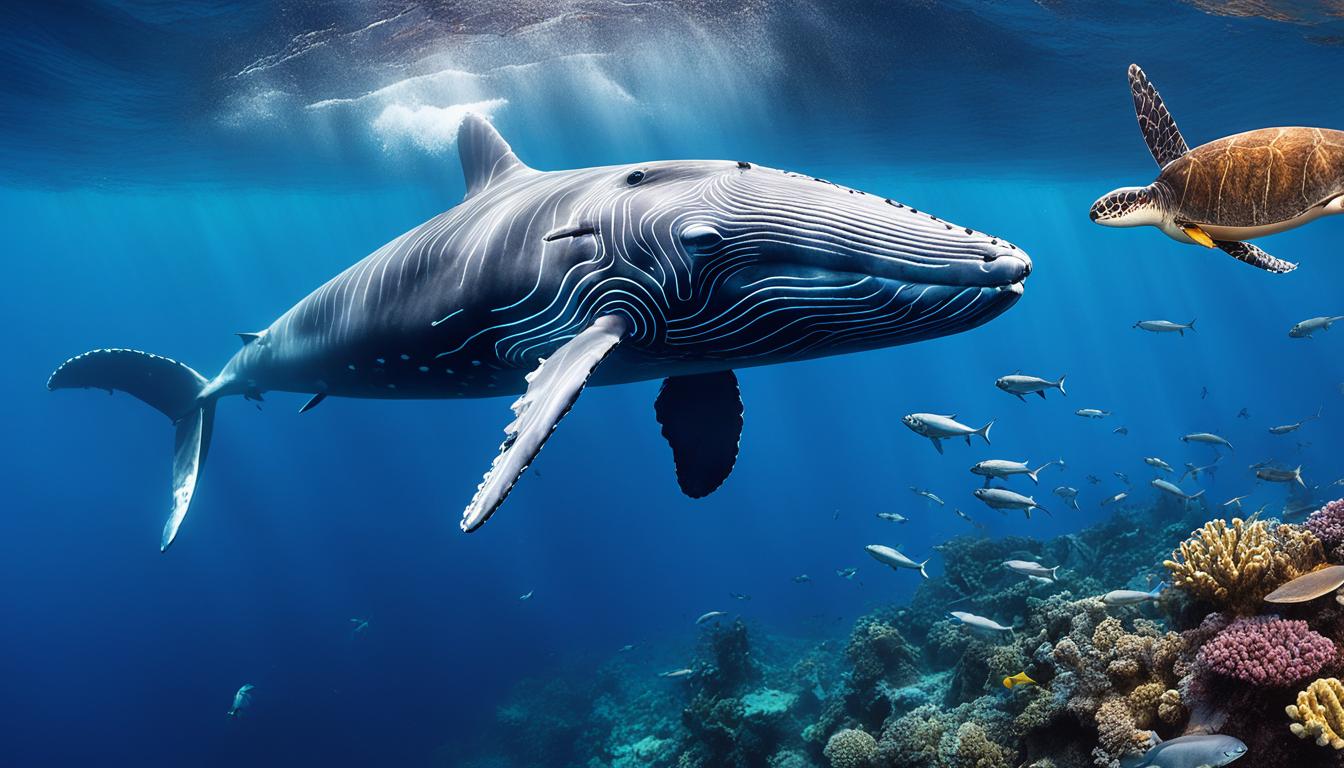
Big ocean creatures also fascinate scientists. With new tech, we learn about their social lives and how they hunt. Species like dolphins, sharks, and giant squid show us how diverse and connected ocean life is.

Exploring the ocean still holds many secrets. From plankton to whales, the ocean’s wonders inspire and teach us. They remind us of the ocean’s beauty and how fragile it is.
Fun Facts About Ocean Depths
The ocean is vast and full of mysteries. It’s a frontier that’s mostly unexplored. The ocean’s depth is one of its most captivating features. Let’s explore some interesting facts about the ocean’s depths.
The deepest part of the ocean is the Challenger Deep, in the Mariana Trench. It goes down 36,070 feet (10,994 meters). Imagine the Statue of Liberty at the bottom; its torch would be over a mile away from the ocean floor.
But it’s not just about how deep it is. The ocean’s depths are home to unique and fascinating ecosystems. In the dark, life has found ways to thrive. You’ll find creatures that glow and others that look like they’re from another world.
Exploring the ocean’s depths is hard because of the pressure and lack of light. Yet, each expedition brings us closer to understanding the ocean’s secrets. It shows us the beauty and wonder of the ocean’s depths.
Oceans: Vital for Life on Earth
The oceans are key to keeping life on Earth going. They help control the global climate and give us the resources we need to live. Without oceans, life on our planet would be very different.
Regulating Climate and Providing Resources
Oceans play a big part in the climate. They soak up and spread heat, which affects the weather and temperature. They also help with the carbon cycle by taking in a lot of carbon dioxide, which fights climate change.
These waters are full of resources like food, energy, and materials. These are vital for people and the economy. The importance of oceans goes way beyond just the climate and resources they give us.
The ocean’s role on Earth is complex. The ocean’s impact on climate is key to our planet’s health. As we learn more about the oceans, we see how crucial ocean resources are for life.
Oceans are essential for life on Earth. We must protect and manage them well to keep them safe for the future. By valuing the importance of oceans, we can make sure they last for generations to come.
Unique Ocean Phenomena
The oceans are full of mysteries and wonders. They show us the beauty of nature in ways we can hardly imagine. From the magical glow of bioluminescence to the huge waves, the oceans never stop amazing us.
Bioluminescent Wonders
Bioluminescence is one of the most magical things in the ocean. It’s when living creatures make their own light. When certain plankton and jellyfish move, they light up the water with a beautiful blue-green glow.
This light comes from a special chemical reaction inside them. It makes the ocean look like a magical place. Seeing this light is a rare treat for those who get to experience it.

Towering Waves
Another amazing thing in the ocean is giant waves. In some places, the ocean currents and weather make waves that can be over 100 feet tall. These waves are called rogue or freak waves.
They are both beautiful and scary to see. They remind us of the ocean’s power and how unpredictable it can be.
The oceans are full of wonders like bioluminescence and giant waves. These phenomena show us the beauty and power of the oceans. They remind us of the mysteries that lie beneath the surface.
Fun Facts About Ocean Exploration
The ocean’s depths have always sparked human curiosity. From early explorers to today’s tech, we’ve always sought to explore the deep. Let’s explore some cool facts about ocean exploration.
Deep-sea submersibles are a big deal in ocean exploration. These machines let researchers go as deep as 11,000 meters (36,000 feet). They help scientists study deep sea life and find new species that live in harsh conditions.
Mapping the ocean floor is another big achievement. Advanced sonar tech has made detailed maps of the ocean’s bottom. These maps show us underwater mountains, canyons, and other features we didn’t know about. They help us understand how our planet formed and changed over time.
Exploring the ocean has also led to discoveries of old shipwrecks and sunken cities. These finds give us a peek into human history at sea. New tech lets archaeologists study these sites, finding artifacts and telling us about the past.
As we keep exploring the ocean, the future looks exciting. We’re working on things like autonomous underwater vehicles and better imaging tech. These advances help us learn more about our planet and its natural systems.
The Power of Ocean Currents
The oceans are filled with a complex network of ocean currents. These currents are key to managing the Earth’s climate and weather. They are driven by wind, temperature, and salinity differences.
The thermohaline circulation, or the “ocean conveyor belt,” is at the center of this system. It’s a massive ocean heat transport system. Warm, salty water moves towards the poles, while cooler, fresher water goes back to the equator. This movement spreads heat across the globe, helping to control the climate and support marine life.
Other ocean currents like the Gulf Stream and the Kuroshio Current also shape our environment. The Gulf Stream brings warm water north, making the climate of eastern North America and Western Europe milder. The Kuroshio Current affects the weather and marine life near Japan.
Knowing about ocean currents is key to understanding climate change. As the planet warms and weather patterns change, these currents become more important. Scientists study ocean currents to learn how the ocean and atmosphere interact. This helps us protect our planet.
Oceans: Treasure Troves of History
The vast oceans have long been full of hidden history. They keep the secrets of old times under their calm surfaces. From the wreckage of famous ships to the remains of ancient cities, the ocean shows us the past. It does this through the deep blue depths.
Shipwrecks and Sunken Cities
Shipwrecks on the ocean floor tell stories of both victory and loss. They are from the doomed trips of famous explorers and the sinking of big ships. Underwater archaeologists have found these sunken cities. They show us the old civilizations that once thrived but are now silent.
Exploring these underwater ruins gives us a peek into the past. It helps us understand the lives and cultures of our ancestors. The finding of sunken ships and cities has sparked our curiosity about the mysteries under the sea.
From the famous Titanic to the mysterious Atlantis, the oceans keep history’s remnants. They invite us to dive deeper and find the stories that are still hidden. As we keep exploring and studying these underwater treasures, we learn more about our shared past. We see the rich history of human civilization that has spread across the oceans.
Fun Facts About Oceans
As we wrap up our journey through the world’s vast oceans, get ready for some surprising facts. These will make you appreciate these natural wonders even more. From tiny plankton to huge whales, the oceans are full of interesting trivia.
Did you know the biggest living thing on Earth isn’t a building or a statue? It’s the Great Barrier Reef, stretching over 1,400 miles off Australia’s coast. This underwater world is full of life and can even be seen from space. Also, the ocean holds about 20 million tons of gold, hidden in the seabed and water.
Delving deeper, the blue whale, the biggest animal on Earth, makes sounds that reach 188 decibels. That’s as loud as a jet engine. But the ocean’s depths are not just quiet; they have powerful forces. Currents can move at over 5 miles per hour, carrying huge amounts of water and nutrients around the world.