

























Dive into the deep ocean and discover a world full of incredible creatures and secrets. This vast, unexplored realm is full of mysteries that capture our imagination. It’s home to strange life forms and new technologies that reveal its secrets.
Go beyond the sunlit surface to see the true wonders of the deep. Meet creatures that live in extreme conditions and complete darkness. Learn about seamounts and hydrothermal vents, places where life thrives in the deep sea.
Visit the Mariana Trench, the deepest part of Earth, to uncover its secrets. The deep ocean is full of fascinating facts, from glowing creatures to stories of shipwrecks and underwater discoveries.
Get ready to be amazed by the incredible facts about this mysterious ocean. Let’s explore the wonders that lie beneath the waves.
Unraveling the Mysteries of the Deep Blue
The deep ocean is a world unlike any other, full of strange and fascinating creatures. As we go deeper, we find a place where nature’s rules are different. Life has evolved in amazing ways to survive in extreme conditions.
Bizarre Creatures That Call the Depths Home
The anglerfish is one of the deep sea’s most intriguing creatures. They live in darkness, using a glowing lure to catch prey. Their sharp teeth and odd looks make them seem like aliens from the sea.
The giant squid is another marvel of the deep. These huge creatures have huge eyes and long arms. For years, people have been fascinated by them. Scientists are now learning more about these deep-sea giants.
Extreme Environments and Adaptations
The deep ocean is very pressurized, dark, and has little food. But, creatures have adapted to live there. The dumbo octopus has ear-like fins that help it move in the deep sea.
From the anglerfish’s glow to the squid’s strange looks, the deep ocean is full of life and adaptation. As we learn more about the deep sea, we’ll find even more amazing creatures. These creatures challenge what we think we know about life on Earth.
Fun Facts About the Vast Underwater World
Get ready to be amazed by deep ocean facts and ocean trivia. They show the incredible world beneath our feet. From the huge size of the world’s largest ocean to the long lives of deep-sea creatures, these facts reveal the ocean’s hidden wonders.
The Pacific Ocean is huge, covering about 63 million square miles. It’s the biggest ocean on Earth. Imagine, it could fit all the world’s land in it. The ocean’s depth is also incredible, with the Mariana Trench reaching 36,000 feet down.
Some deep-sea creatures live a very long time. The Greenland shark, found in the North Atlantic and Arctic Oceans, can live up to 400 years. This makes it one of the longest-lived animals on Earth. These sharks have seen many generations come and go, offering a peek into the ocean’s secrets.
The oceans are huge, and their creatures live a long time. These deep ocean facts and trivia show us the amazing world beneath the waves. They invite us to explore and learn more about this vast underwater frontier.
Earth’s Hidden Wonders: Seamounts and Hydrothermal Vents
Deep in the ocean, a world full of life and wonders lies hidden. Seamounts and hydrothermal vents are key to this world. They are special places that support a wide variety of marine life.
Underwater Oases of Life
Seamounts are huge underwater mountains that rise from the ocean floor. They create homes for many species, from colorful coral reefs to fish. Hydrothermal vents are like underwater springs. They release hot water full of minerals, making life possible in the deep ocean.
Seamounts and hydrothermal vents are vital for deep ocean life. They support everything from tubeworms to deep-sea fish and whales. These places are important for many species.

Seamounts and hydrothermal vents are amazing on their own. They also help us understand the deep ocean’s complex life. By studying them, scientists learn more about the ocean’s hidden life. This knowledge helps us protect and manage the ocean better.
The Mariana Trench: Plunging Into the Deepest Chasm
Step into the mysterious world of the Mariana Trench, the deepest part of the ocean. It’s in the western Pacific Ocean and goes down 10,994 meters (36,070 feet). That’s the deepest spot in the oceans. Imagine the Statue of Liberty at the bottom; its top would be over 2,000 meters (6,500 feet) from the water.
The Mariana Trench is huge and has incredible pressure. The pressure is like having three SUVs on your thumb. Only a few creatures can live here because it’s so extreme. These include the giant squid, Mariana snailfish, and sea spiders.
Going to the Mariana Trench is very hard. It needs advanced tech and a lot of courage. Only a few people have made it to the bottom. Their trips have shown us the amazing life and secrets of the deep ocean.
Unexplored Frontiers: The Deep Ocean’s Mysteries
The deep ocean is a vast, mysterious place. Despite years of exploration, it still holds many secrets. Thanks to new ocean technology, we’re slowly uncovering its mysteries. This reveals a world full of life that is both fascinating and strange.
Technological Advancements Unveiling Hidden Realms
New tools like deep-sea submersibles and underwater vehicles have changed how we explore the ocean. These tools let researchers dive deeper and stay longer. They also collect more data than before.
This means we’re finding new species, unique ecosystems, and strange phenomena. It’s like uncovering hidden wonders of the deep ocean.
Robotic explorers with high-definition cameras and sensors help scientists explore the deep. They show us the weird creatures living in the Mariana Trench and the colorful life around hydrothermal vents. These tools are changing how we see the deep ocean.
Exploring the deep ocean is still a big adventure. With each dive, we learn more and uncover its secrets. This reveals a world of wonder and possibility that has always fascinated us.
Marine Conservation: Protecting the Ocean’s Wonders
As we explore the deep ocean, it’s clear we must act fast to protect its delicate ecosystems and rich biodiversity. Ocean conservation is a key issue that needs our focus and action.
The deep sea hosts a variety of ecosystems, from colorful coral reefs to hot springs full of unique life. But these places face threats from overfishing, deep-sea mining, and plastic pollution. We must protect the ocean’s wonders to keep our planet healthy for the future.

Researchers and conservationists are working hard to learn about the deep ocean and find ways to protect it. Creating marine protected areas, setting rules on deep-sea mining, and working together to stop illegal fishing are important steps towards a sustainable ocean.
But the deep sea is still a mystery, and we have much to learn about its life. We need more scientific research and strong conservation efforts to keep the ocean’s wonders safe for the future.
By focusing on ocean conservation, we can protect the deep sea’s unique ecosystems and the benefits they give to our planet. With new solutions and a shared commitment, we can keep the ocean’s mysteries and beauty inspiring us for many years.
Bioluminescence: Nature’s Dazzling Light Show
Step into the world of bioluminescence, a magical light show in the ocean’s depths. This natural wonder lets some sea creatures glow on their own. It’s a sight that amazes scientists and adventurers alike. This light show under the sea shows us the ocean’s hidden beauty.
Enchanting Displays in the Abyss
Going deeper into the ocean, bioluminescence lights up the darkness. Creatures like glowing plankton and jellyfish use this light for many things. They attract food, scare off predators, and talk to each other. These lights create a magical scene that leaves people amazed.
Bioluminescence isn’t just deep sea magic; it’s found all over the ocean. There’s a wide variety of glowing sea creatures, each with its own way of lighting up. From fireflies to glow-worms, this phenomenon has always fascinated humans.
Underwater, bioluminescence is key to survival in the dark sea. It helps creatures move around, find friends, and avoid danger. As we learn more about the ocean, we see how important bioluminescence is. It shows us how all life in the ocean is connected.
Shipwrecks and Underwater Archaeology
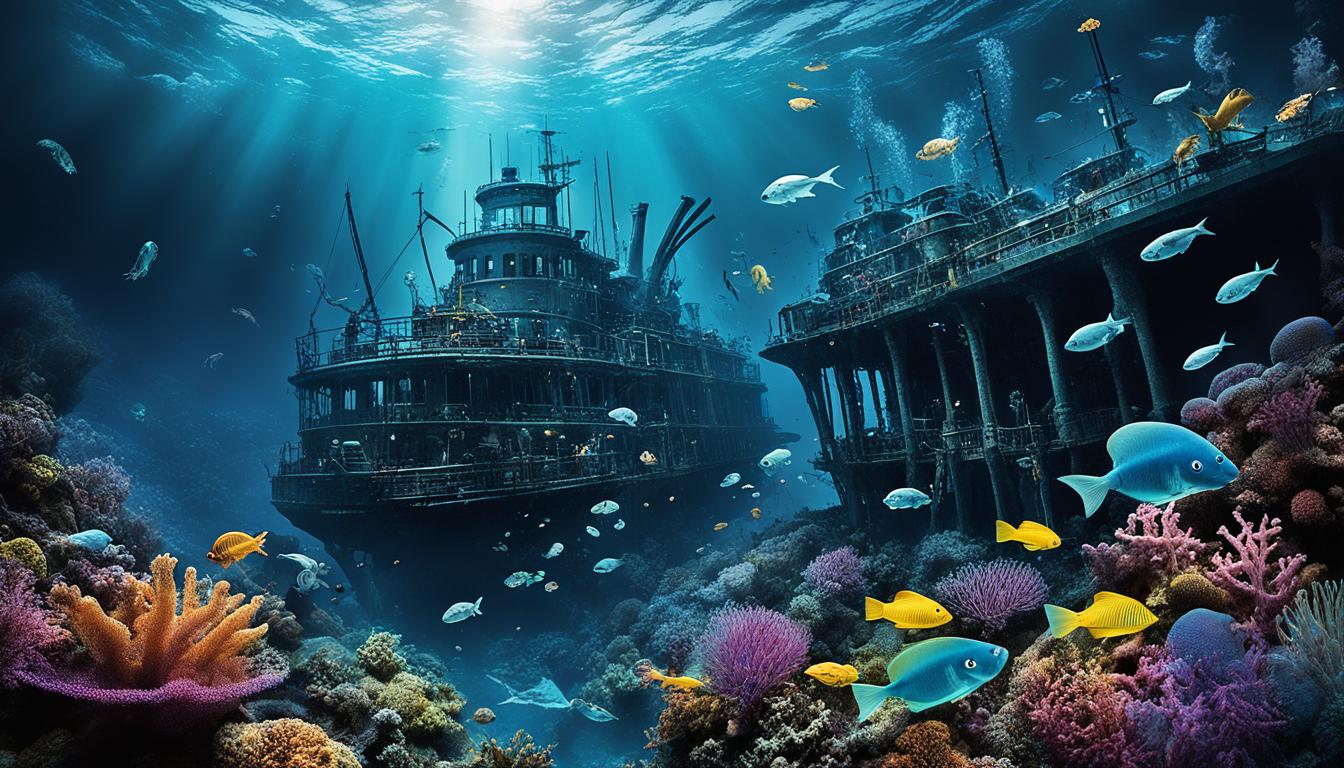
The deep ocean is home to many shipwrecks, each a treasure chest of history. Underwater archaeology is the study of these shipwrecks. It helps us learn about our maritime past.
Uncovering Oceanic Treasures and Histories
The ocean’s depths hide many artifacts from old times. These are kept safe by the cold, dark water. Underwater archaeologists use new tech to find and study these shipwrecks.
They find stories of human exploration, trade, and the sea’s mystery. Each shipwreck has its own tale. It tells us about the people who sailed the seas.
By digging up and studying these artifacts, researchers can piece together the past. They learn about maritime traditions, naval designs, and the lives of sailors. This helps us understand human history and our bond with the sea.
These underwater treasures fascinate scientists and the public. New tech lets us explore and discover more about these sites. With each new find, we learn more about our ocean’s history, one shipwreck at a time.
The Deep Ocean’s Impact on Our Planet
The deep ocean is more than just a place to explore. It’s a key part of our planet’s health and stability. It helps control the climate and supports important ecosystems, showing its big impact.
This vast ocean acts as a carbon sink, taking in a lot of carbon dioxide from the air. This helps fight climate change. The deep ocean also feeds the ocean’s life with nutrients, supporting a wide variety of marine life.
But, we know very little about the deep ocean. As we learn more, it becomes clear why we must protect it. Keeping the deep ocean safe helps our planet and future generations.