


























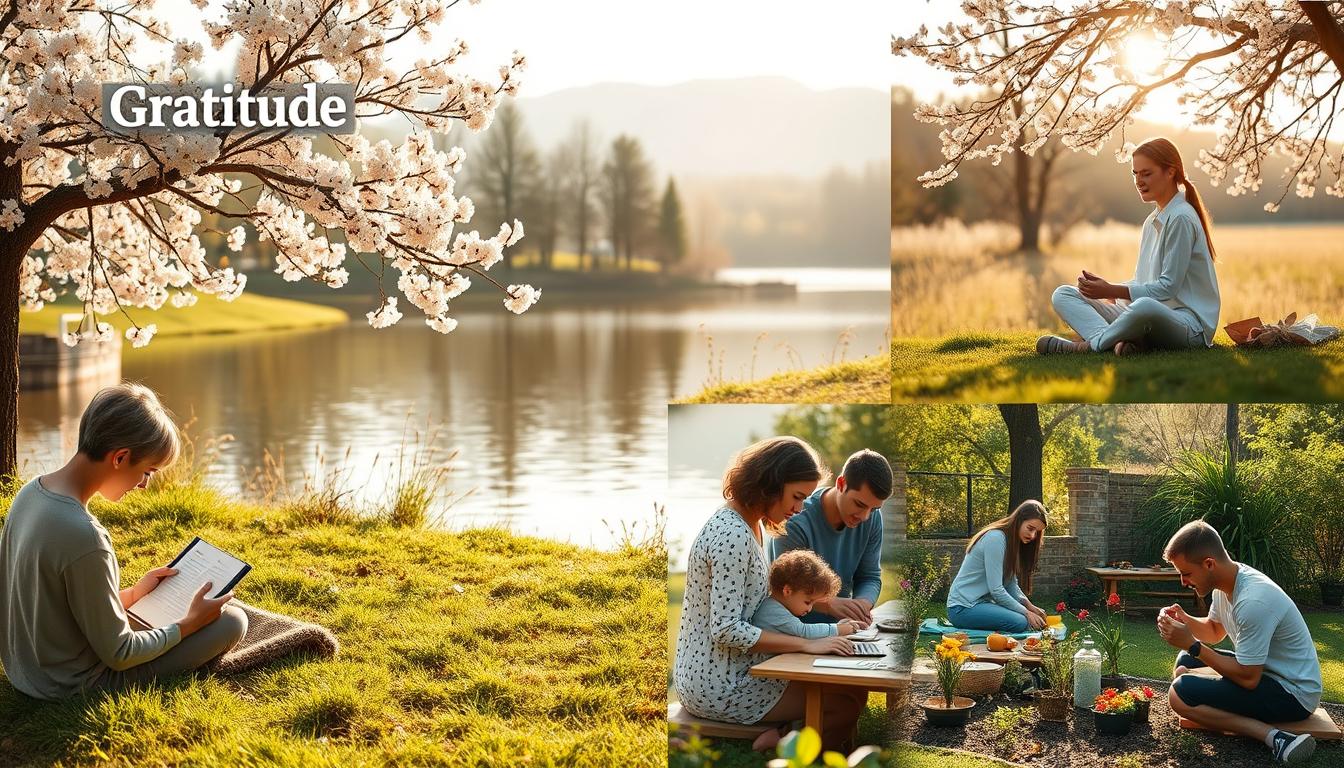
In today’s fast world, it’s easy to miss the things we should be thankful for. Gratitude can change how we see things and make us happier. By focusing on what we have, not what we don’t, we live a more positive life.
Practices like keeping a gratitude journal help us stay present. They make us notice the good things in our lives, like family, nature, and simple joys. This change in how we see things can make us happier and more resilient.
Gratitude not only changes us but also those around us. When we show real thanks, we build stronger relationships. It’s a powerful way to improve our lives and the lives of those we care about.
Understanding Gratitude Practices
Gratitude practices are powerful tools that can change your view and make your daily life better. They involve noticing and valuing the good things in your life. This includes small joys, support from loved ones, and blessings you might overlook.
Being thankful is more than just feeling good. Research shows it boosts happiness, health, and relationships. By focusing on the positive, you can beat negative thoughts and live with hope and purpose.

But, some people misunderstand gratitude. They think it’s just saying “thank you” or keeping a journal. While these are good, gratitude is more. It’s about truly valuing people, experiences, and chances in your life, and showing that value through words and actions.
Reflecting on what you’re thankful for each day can change your life. So can joining a weekly gratitude circle. Adding these practices to your routine can make you happier, stronger, and more fulfilled.
The Science Behind Gratitude
Gratitude is more than just a good feeling. It deeply affects our well-being. Research in positive psychology has shown its benefits. These include better mental health and physical health.
Studies found that expressing gratitude boosts happiness and life satisfaction. People who keep gratitude journals or count their blessings feel more positive. They also have less anxiety and depression and appreciate life more.

Neuroscience has uncovered how gratitude works in our brains. When we feel gratitude, our brain releases dopamine and serotonin. These chemicals make us feel good and help us manage our mood. This can improve sleep, reduce inflammation, and strengthen our immune system.
Gratitude also helps us connect with others better. It makes our relationships stronger and more meaningful. This leads to a sense of belonging and happiness in our lives.
In short, gratitude has a big impact on our mental, physical, and social health. Adding gratitude to our daily routine can help us grow and live a more fulfilling life.
Daily Gratitude Practices
Starting a daily gratitude practice can change how you see the world. Try Gratitude Affirmations to begin your day. Think of three things you’re thankful for, like your health or the people around you.
Gratitude journaling is also great. Write down the best parts of your day and who you’re thankful for. It helps you remember the good times and people in your life.

Gratitude meditation is another powerful way to practice. Find a quiet spot, breathe deeply, and think of something you’re grateful for. Keep doing this for a few minutes, enjoying the moments that make your life richer.
Choose a gratitude practice that works for you and do it every day. Focusing on gratitude can make you feel more abundant and happy. It can improve your life in many ways.
The Role of Gratitude in Relationships
Gratitude is more than just a personal habit. It’s key to making our personal and work relationships stronger. When we show Appreciation Exercises to others, it builds a stronger bond. It makes us more empathetic and trusting.
By thanking those around us, we create a positive atmosphere. This helps everyone support each other better.
One great way to show gratitude is through Pay-It-Forward Acts. It’s about doing more than just saying “thank you.” For example, you could surprise a friend with their favorite snack or help a coworker out. These acts of kindness make someone’s day and strengthen your connection.

Gratitude also helps in solving conflicts and improving how we talk to each other. When we’re grateful, we listen better and find common ground. This way, we can handle tough situations with more understanding and kindness.
Adding Appreciation Exercises and Pay-It-Forward Acts to your relationships can change a lot. It makes your connections deeper and creates a sense of community. This is vital for our happiness and well-being.
Gratitude in the Workplace
Gratitude is powerful beyond our personal lives. It changes the workplace, making employees happier, more productive, and creating a better culture. Companies are now using Thankfulness Rituals and Mindful Reflection to see these benefits.
Feeling valued at work makes employees more engaged and loyal. When they’re thanked for their work, they’re more willing to help out and work well with others. This improves morale, communication, and helps the business grow.
Companies like Salesforce and Google have started new ways to show gratitude. They have team shoutouts, gratitude journals, and awards for appreciation. These actions help employees feel valued and think about the good they do.
Creating a grateful workplace lets employees reach their full potential. It makes them feel part of a team, with a shared goal. As more companies see the value of gratitude, it will become a key part of work life.
Creative Ways to Practice Gratitude
Gratitude can change how we see the world and make us happier. But, not everyone likes writing in a journal or saying thanks out loud. Luckily, there are many fun ways to add gratitude to our daily lives.
Gratitude Meditation is a cool way to mix mindfulness with being thankful. By taking a few minutes each day to think quietly, we can feel more thankful and happy.
Savoring Moments is another creative method. It’s about stopping and enjoying the little things we often miss. It could be the smell of coffee, the sun’s warmth, or a friend’s laugh. Learning to enjoy these moments can make us feel very grateful.
Trying different gratitude practices can help us see things in a new light. It can make us happier and more thankful for what we have. So, let’s try out different ways and see what works best for us.
Overcoming Challenges to Gratitude
Practicing gratitude can change how we see the world and make us more positive. But, even those who love gratitude can hit roadblocks. It’s key to overcome these hurdles to make gratitude a lasting habit.
Negativity bias is a big challenge. Our brains naturally look for the bad, a leftover from when survival depended on spotting dangers. To fight this, we need to make a conscious effort to notice the good. This means taking time to think about the small joys and simple pleasures in our lives.
Life’s tough times, like health issues, money problems, or losing someone close, can make it hard to stay grateful. It’s easy to get caught up in the negatives. But, using gratitude practices can help us stay strong during these hard times. By focusing on the positive, we can find balance and keep going.
Beating the obstacles to gratitude takes time, effort, and a change in how we think. By embracing Gratitude Practices and Counting Blessings, we can become more thankful and resilient. This way, we can handle life’s ups and downs with grace.
Long-Term Impact of Gratitude Practices
Adding gratitude to your daily routine can change your life for the better. Keeping a gratitude journal and reflecting mindfully can boost your mental health. It also makes your relationships stronger and your life more satisfying.
Research shows that feeling grateful can lower depression and anxiety. It also makes you feel happier and more fulfilled. Gratitude changes how your brain works, making you more positive and resilient.
Gratitude also improves your relationships. By showing thanks to those around you, you build stronger connections. Couples who are grateful together feel more connected and committed.
In the end, gratitude can completely transform your life. It helps you appreciate more and find joy in everyday moments. This leads to a more purposeful and fulfilling life.
Resources for Further Exploration
As you continue your journey of cultivating gratitude, many resources are available to support and inspire you. You can find thought-provoking books, guided meditations, and online communities. These opportunities help deepen your gratitude practice.
“The Book of Joy” by the Dalai Lama and Desmond Tutu is a great read. It explores the transformative power of joy and gratitude in tough times. Another book, “One Thousand Gifts” by Ann Voskamp, is a poignant exploration of savoring life’s everyday blessings.
The “Gratitude Journal” app by Simple Habit is a practical tool. It offers a user-friendly platform to record your daily moments of appreciation. The “Pay-It-Forward Acts” website also provides inspiring ideas and resources. By using these Gratitude Affirmations and Pay-It-Forward Acts, you can cultivate a deeper sense of purpose and connection.