
























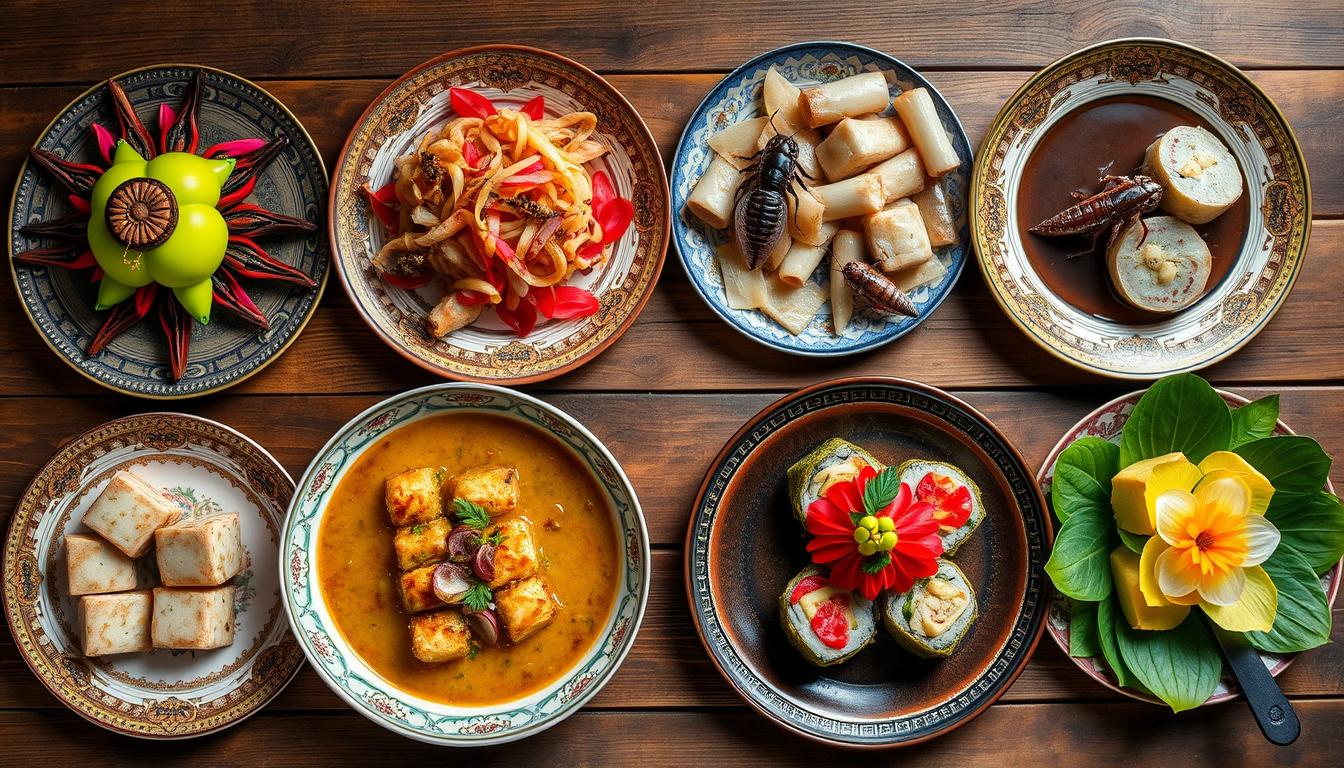
In the world of food, there’s a special place for Bizarre Foods. These dishes push the limits of what we think is food. They include fermented foods and creepy crawlers, showing us the rich cultures and traditions of global cuisine. Get ready for a food journey as we explore 8 unusual dishes you might want to try.
Key Takeaways
- Bizarre Foods give us a peek into the cultural importance and cooking methods of unique dishes worldwide.
- Trying unusual foods can open your mind to new tastes and traditions.
- Being open to Bizarre Foods means embracing adventure and stepping out of your comfort zone.
- It’s important to know how to prepare and safely eat Bizarre Foods, as some can be risky.
- Understanding the cultural background of Bizarre Foods makes the experience richer and more meaningful.
Introduction to Bizarre Foods
In the world of Cultural Gastronomy, “bizarre foods” fascinate many. These unconventional culinary experiences show us the variety of cultures and human ingenuity. They go beyond usual food, giving us a peek into different traditions.
What Defines Bizarre Foods?
Bizarre foods are dishes that challenge our ideas of what’s edible. They use strange ingredients, cooking methods, or ways of serving. But, they also show the unique stories and traditions of the cultures that enjoy them.
The Cultural Significance of Unusual Dishes
Worldwide, bizarre foods show human societies’ strength and creativity. When resources are scarce, people find new ways to eat. These adventurous eating habits help communities survive and keep their cultural gastronomy alive.
“The true essence of a culture is often reflected in its most unusual culinary offerings, for they reveal the adaptability and resourcefulness of a people.”
What we find “bizarre” depends on our cultural views. What’s a delicacy in one place might be strange elsewhere. This shows how rich and varied our food experiences are.
Exploring bizarre foods invites us to try new things and broaden our understanding. It’s not just about food; it’s about learning about the world’s diverse ways of living and eating.
1. Haggis: The Scottish Delicacy
Haggis is a dish that stands out in the world of Exotic Delicacies. It’s a savory pudding made from sheep’s heart, liver, and lungs. These are wrapped in the animal’s stomach, showing the rich culinary heritage of Scotland.
Ingredients That Might Surprise You
The ingredients in Haggis might surprise you at first. Sheep’s heart, liver, and lungs mix with onion, oatmeal, suet, spices, and salt. This creates a filling that’s both rich and flavorful. It’s all wrapped in a sheep’s stomach, showing the creativity of Scottish cooks.
How It’s Traditionally Served
Haggis is a dish deeply rooted in Scottish culture. It’s served with mashed potatoes (neeps) and mashed turnips (tatties). This combination of flavors and textures is quintessentially Scottish. A glass of Scotch whisky is often added, making the meal even more special. Haggis truly represents the Scottish spirit, celebrating the country’s culinary traditions.
“Haggis is the perfect example of how Outlandish Ingredients can be transformed into a beloved Cultural Gastronomy dish.”

2. Sannakji: A Korean Seafood Sensation
Sannakji is a standout in Bizarre Foods and Unusual Cuisine. It’s a dish from Korea that offers a unique dining adventure. It features live, squirming octopus tentacles.
What Makes It Unique?
The octopus in sannakji is served right after it’s caught, still alive. This makes for a fascinating visual and texture experience. Diners must eat the tentacles fast before they stop moving.
The dish’s freshness and liveliness are key to its cultural importance in Korean cuisine.
The Right Way to Eat Sannakji
Eating sannakji needs a special technique for safety and fun. Diners should chew the tentacles well to avoid choking, as the suction cups can stick to the throat. It’s also seasoned with sesame oil and toasted sesame seeds, adding a tasty flavor.
“The experience of eating sannakji is truly one-of-a-kind, blending the thrill of Adventurous Eating with the cultural traditions of Korean cuisine.”
For those looking for a Bizarre Foods adventure, sannakji is a must-try. It highlights the creativity and diversity of global cuisine.
3. Casu Marzu: The Sardinian Cheese
In the world of Exotic Delicacies, Casu Marzu stands out. It’s a cheese from Sardinia that’s both intriguing and controversial. This Unconventional Culinary Experience is bold, featuring live Outlandish Ingredients – the larvae of the cheese fly.
The Fermentation Process Explained
Making Casu Marzu is a detailed and hard work. It starts with aging Pecorino, a cheese made from sheep’s milk. Then, the cheese is purposely infested with Piophila casei larvae.
These larvae eat the cheese, breaking down fats. This makes the cheese soft, creamy, and strong-smelling. The cheese becomes soft and runny, unlike the firm Pecorino it’s based on.
Health Risks and Regulations
- Eating Casu Marzu is risky. The live larvae can move into your digestive system, causing big problems.
- Because of these risks, many places have strict rules about making and selling Casu Marzu. Some places even ban it.
- But in Sardinia, Casu Marzu is a cherished Exotic Delicacy. Fans and makers work hard to keep this Unconventional Culinary Experience alive.
“Casu Marzu is not for the faint of heart, but for those willing to embrace the Outlandish Ingredients and Exotic Delicacies of traditional Sardinian cuisine, it can be a truly unique and unforgettable culinary adventure.”
4. Fried Tarantulas: A Cambodian Treat
In the world of Bizarre Foods and Daring Dishes, fried tarantulas from Cambodia are a standout. They offer a unique taste into the country’s rich food culture. Travelers and food lovers alike find them fascinating.
How They’re Prepared and Cooked
Fried tarantulas are a hit in Cambodia’s streets. They start with picking the right spiders from the countryside. Then, they clean and season them with spices.
Next, they fry the tarantulas in hot oil until they’re golden brown. This makes them crispy and flavorful.
Nutritional Benefits of Eating Insects
Eating fried tarantulas might seem bizarre at first. But, eating insects is becoming more popular. Tarantulas and other insects are packed with protein, healthy fats, and vitamins.
- Tarantulas are full of protein, making them a great food choice.
- They also have good fats like omega-3s, which are good for health.
- Insects are full of vitamins and minerals like iron, zinc, and calcium.
As more people try Bizarre Foods, fried tarantulas are getting more attention. They’re celebrated for their taste and health benefits.
5. Escargot: The French Snail Dish
In the world of Exotic Delicacies and Unusual Cuisine, escargot stands out. It’s a French dish that’s all about exploring new tastes and textures. It’s a true adventure for your taste buds.
The Preparation and Cooking Techniques
Getting escargot ready to eat is a detailed task. First, snails are cleaned by soaking them in a cornmeal or flour mix for days. This helps remove any dirt or impurities.
After cleaning, the snails’ shells are taken off. This reveals the tender meat inside. Then, the snails are cooked in garlic butter or oil, seasoned with herbs like parsley or thyme.
Pairing Escargot with Wine
Escargot pairs well with wine, thanks to its unique flavors. A dry white wine, like Sauvignon Blanc or Chablis, is a great match. It cuts through the richness of the snail meat and garlic butter.
For a different taste, try a light red wine, such as Pinot Noir. It brings out the earthy flavors of the dish.
“Escargot is a true celebration of the French culinary tradition, where the appreciation for Adventurous Eating and the art of pairing food with wine converge to create a truly memorable dining experience.”

6. Century Eggs: A Chinese Specialty
In the world of Bizarre Foods, century eggs stand out. They are a key part of Chinese Cultural Gastronomy. These eggs look and taste unlike anything else, making them a must-try for the bold.
What Are Century Eggs Made Of?
Century eggs, also known as “pidan” or “thousand-year eggs,” are made through a special process. They’re not aged for a century, but their look and taste change. Duck or chicken eggs are mixed with clay, ash, salt, and lime.
This mix turns the yolks dark greenish-grey and the whites amber. It’s a unique transformation.
Traditional Ways to Enjoy Century Eggs
- They’re often served as a savory appetizer, sliced and with soy sauce, ginger, and scallions.
- In congee, a Chinese rice porridge, they add a special flavor and texture.
- They’re used in many Chinese dishes, like century egg and pork congee or century egg salad.
- They’re also enjoyed on their own, with their unique aroma and rich umami flavor.
Century eggs hold deep cultural meaning in China. They symbolize longevity, good luck, and prosperity. These Bizarre Foods are a big part of Chinese Cultural Gastronomy. They show the country’s rich food history and love for Outlandish Ingredients.
7. Surströmming: Fermented Herring from Sweden
In the world of Exotic Delicacies and Offbeat Flavors, surströmming stands out. This fermented herring from Sweden is known for its strong smell and taste. It has won over many adventurous eaters around the globe.
The Unique Fermentation Process
The secret to surströmming’s bold taste is its fermentation. Herring is packed in brine and left to ferment for months. During this time, bacteria and enzymes change the fish into a unique delicacy.
The fermentation creates hydrogen sulfide, giving it a strong smell. But, this smell is balanced by the complex flavors developed during curing.
How to Properly Open a Can
Serving surströmming is a special ritual. It’s stored in pressurized cans. Opening these cans needs care and a well-ventilated area, as gases can cause them to burst.
To open it right, submerge the can in water first. Then, open it slowly to let the smell out. After opening, serve it with flatbread, potatoes, sour cream, and red onion. This mix of flavors is a key part of Swedish food culture.
“Surströmming is not for the timid. But for those ready to try Exotic Delicacies and Offbeat Flavors, it’s a memorable Unconventional Culinary Experience.”

8. Fugu: The Risky Japanese Delicacy
In the world of Bizarre Foods, fugu stands out. It’s a Japanese dish made from pufferfish, known for its danger. This Daring Dish has fascinated many with its unique preparation and the excitement of eating it.
Why Fugu Requires Special Preparation
Fugu is not just any seafood. It has a toxin called tetrodotoxin that can be deadly. Only special chefs, called “fugu chefs,” can prepare and serve it. They must be very skilled to avoid serious harm.
The Experience of Eating Fugu
Eating fugu is a unique experience. The fish’s slices are thin and taste sweet. They also have a crunchy texture. The danger adds to the thrill of trying this Bizarre Food.
“Eating fugu is like dancing with death. It’s a thrill that few other dishes can provide.” – Renowned food critic, Masahiro Yamamoto
Conclusion: Embracing Culinary Adventures
Exploring Bizarre Foods opens up a world of new flavors and cultural experiences. From Scotland’s savory haggis to Korea’s lively sannakji, trying new foods is rewarding. It’s a journey that can change your perspective and broaden your taste.
Why You Should Try Bizarre Foods
Trying unconventional culinary experiences expands your taste and connects you with cultures. It shows the richness and diversity of global food. This can deepen your understanding and respect for different lifestyles.
Tips for the Adventurous Eater
Ready to try Bizarre Foods? Start with an open mind and curiosity. Learn about the dishes and their cultural background. Seek local advice and consider health and safety. Most importantly, enjoy the journey and let your taste guide you.