


























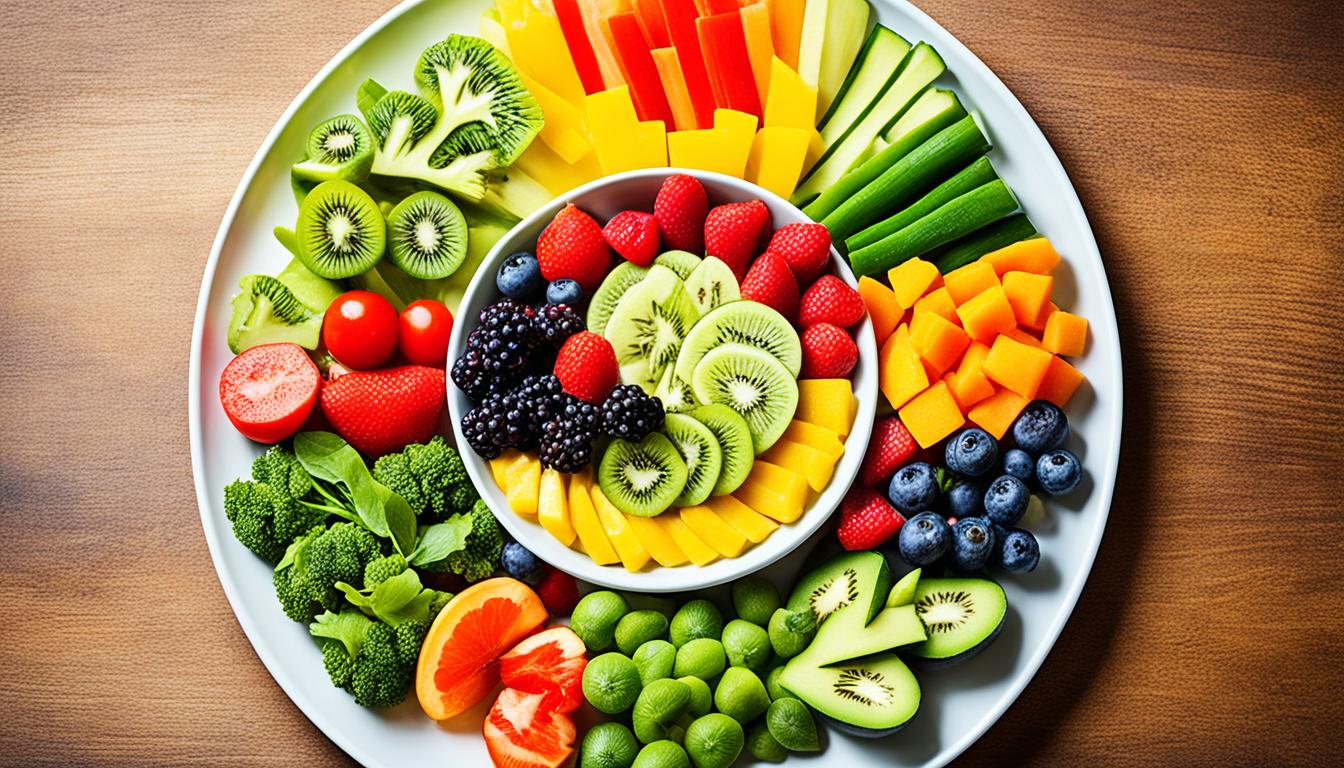
Starting a healthy lifestyle begins with a balanced eating plan. It helps with weight management, boosts energy, and improves health. This guide will show you how to make a plan that fits your needs.
Creating a healthy eating plan is tailored to you. It’s about knowing what you need and what you like. By looking at your current eating habits and setting goals, you’re on the right track.
This article will talk about the importance of a balanced diet. We’ll cover macronutrients and micronutrients, planning meals and snacks, and overcoming eating challenges. We’ll also look at how to stay active and eat mindfully. By the end, you’ll know how to make a healthy eating plan that suits you.
Understanding the Importance of a Balanced Diet
Keeping a balanced diet is key for your health and well-being. It means getting the right mix of macronutrients (carbs, proteins, fats) and micronutrients (vitamins, minerals). This balance gives your body what it needs to work well.
The Role of Macronutrients
Macronutrients are the big parts of our diet. They give us energy and help with many body functions. Carbs are our main fuel, proteins help build and fix tissues, and fats are important for making hormones and storing energy. Getting the right amount of these helps you stay healthy and feel good.
Micronutrients: The Essential Building Blocks
Your body also needs micronutrients like vitamins and minerals to work right. These nutrients keep your immune system strong, help your bones, and support many body processes. Eating a variety of nutrient-rich foods makes sure you get all these important nutrients.
A balanced diet isn’t about cutting out foods you love. It’s about eating foods that are good for you. Knowing about macronutrients and micronutrients helps you make smart food choices. This way, you can eat well and stay healthy.
Assessing Your Current Eating Habits
Before you start a healthy eating plan, it’s key to know your current eating habits. Look closely at what you eat, when you eat, and any problem areas. This will help you set better goals and make lasting changes.
Keeping a detailed food journal is a great way to track your eating. Write down what, when, and how much you eat every day. Be honest and detailed in your journal. This info is crucial for understanding your eating habits and making changes.
Think about your eating behavior too. Are there times or situations that make you snack or eat too much? Do you skip meals or eat fast food often? Spotting these patterns can show you where you need to improve.
Also, consider how you feel about food emotionally. Do you eat when stressed, bored, or upset? Knowing why you eat can help you change your habits for the better.
This assessment isn’t about judging your habits. It’s about understanding where you are so you can improve. With this knowledge, you can create a healthier eating plan that fits your life and needs.
Setting Realistic Goals for Your Healthy Eating Plan
Setting clear goals is key to a successful healthy eating plan. Make sure your goals match your personal values and desires. This way, you’ll stay committed and see lasting results. We’ll help you set SMART goals in this section.
Identifying Your Motivations
Think about why you want to change your nutrition and lifestyle. Is it for better health, managing a condition, or more energy? Knowing your reasons will keep you focused and motivated.
Establishing Measurable Objectives
Make sure your goals are SMART: Specific, Measurable, Achievable, Relevant, and Time-bound. This approach helps you set realistic goals you can track and adjust. For instance, aim to “increase your daily vegetable intake by two servings over the next four weeks.”

Your goals should fit your unique needs and likes. Feel free to try different approaches until you find what suits you best. With a solid plan and the right mindset, you can make lasting changes for your health.
Planning Nutritious Meals and Snacks
Creating a healthy eating plan means adding whole, minimally processed foods to your daily meals. Whole foods like fruits, vegetables, lean proteins, and grains are key for a balanced diet. They give your body the nutrients it needs.
Incorporating Whole Foods
Whole foods are the core of a nutritious meal plan. They include fresh produce, whole grains, and lean meats. These foods are packed with vitamins, minerals, and fiber. Adding a variety of whole foods to your meals makes them tasty and keeps you full of energy.
Start a meal with lean protein like grilled chicken or baked salmon. Add roasted veggies and quinoa or brown rice on the side. This mix gives you protein, complex carbs, and healthy fats for energy.
For snacks, choose whole foods like fresh fruit, raw veggies with hummus, or nuts. These keep your energy up all day.
Focus on whole foods to make a healthy eating plan that’s good for your body and tastes great. It’s important to balance nutritious meals with some treats for a healthy lifestyle.
Establishing a Routine for Mindful Eating
Mindful eating helps you build a healthy relationship with food and reach your nutrition goals. By adding mindful eating to your daily life, you learn to understand your body’s hunger and fullness signals. This leads to better food choices that are more nourishing.
Being present and focused during meals is a big part of mindful eating. Don’t eat on the go or while doing other things. Take time to enjoy each bite, notice the flavors and textures, and appreciate eating. This helps you know when you’re really hungry and when you’re full. It also helps you avoid eating too much without thinking.
To start mindful eating, set aside specific times for meals and turn off distractions like TV, phones, or computers. Eat at a table and focus on your food. Chew slowly and pay attention to how your body feels. Try different methods like putting your fork down between bites or checking if you’re really hungry before eating more.
Adding changes to your lifestyle can also help with mindful eating. This could mean planning meals, shopping for groceries with care, and making your meal area calm and comfy. By linking your eating habits with your overall awareness and health, you can eat more intuitively. This approach feeds both your body and mind.
Overcoming Challenges and Staying Motivated
Creating a healthy eating plan can be tough, but you can beat the challenges and stay on track. Dealing with cravings and emotional eating is a big hurdle. But, there are ways to handle them well.
Dealing with Cravings and Emotional Eating
Cravings are a big challenge when you’re trying to eat better. They can come from stress, boredom, or seeing certain foods. To fight cravings, know what triggers them and have a plan ready. This could mean keeping healthy snacks around, using mindfulness, or finding new things to do.
Emotional eating is also a common issue. When we’re stressed, anxious, or sad, we might eat for comfort. To beat emotional eating, find healthy ways to cope, like exercising, journaling, or talking to someone. Getting help from a therapist or joining a support group can also help a lot.
Remember, changing your habits takes time and effort. Don’t be too tough on yourself if you make mistakes. Instead, focus on small steps that lead to lasting changes. Celebrate your wins, no matter how small, and don’t hesitate to ask for help when you need it.

By tackling cravings and emotional eating, and staying motivated, you can make a healthy eating plan that lasts. With the right support and a positive attitude, you can beat any challenge and reach your goals.
Incorporating Physical Activity into Your Lifestyle
A healthy eating plan needs regular physical activity. Exercise and staying active are key for good health and happiness. Adding physical activity to your daily life boosts fitness, lowers disease risk, and betters your mood.
Finding Activities You Enjoy
Finding fun exercise routines is key to staying active. Try different activities to see what you like best. Some like intense workouts, while others prefer easy activities like walking or swimming.
Try out various exercises like strength training, cardio, yoga, or sports. See how your body and mind react to each type. Pick activities that match your interests and fitness level. This way, you’ll keep exercising and make it a lasting part of your life.
Make fitness a fun part of your daily life. Choose activities that make you feel good, like a tough gym workout, a calm hike, or a lively dance class. By focusing on physical activity and finding what suits you, you’re on your way to a healthier, more active life.
Meal Prepping and Healthy Eating on the Go
Keeping up with healthy eating can be tough, especially with busy lives and little time. But, with some planning and prep, you can still enjoy nutritious meals and snacks on busy days. The secret? Meal prepping.
Meal prepping means making your meals and snacks ahead of time. This makes it easier to follow your healthy eating goals. By setting aside a few hours each week for meal planning and prep, you’ll have many nutritious options ready. This is true whether you’re at home, at work, or traveling.
Meal prepping offers a big advantage: it’s super convenient. Having healthy, pre-made meals and snacks in your fridge or cooler means you won’t be tempted by unhealthy choices. This saves you time, money, and helps you avoid those “hangry” moments that can mess up your diet.
But it’s not just about being convenient. Meal prepping is also a smart way to manage your time and stick to your healthy eating plan. By planning your meals ahead, you make sure you get the right balance of nutrients. This supports your health and well-being.
To start meal prepping, pick your favorite healthy recipes and plan your meals for the week. Consider getting some good quality food storage containers to keep your meals and snacks fresh. With practice, making delicious, nutritious meals will become easier. This way, eating well on busy days will be a breeze.
Reading Food Labels and Understanding Nutrition Facts
Understanding food labels can change how you shop for groceries. We’ll look at the main parts of food labels, like nutrient content and ingredient lists. This info helps you make choices that support your health.
The nutrition facts panel tells you about the product’s nutrients. Check the serving size, calorie count, and amounts of fat, carbs, protein, and vitamins. This helps you pick products that meet your diet needs.
Ingredient lists are key too. Look for additives, preservatives, or high sugar that don’t fit your health goals. Choose products with whole, less processed ingredients for better nutrition.