


























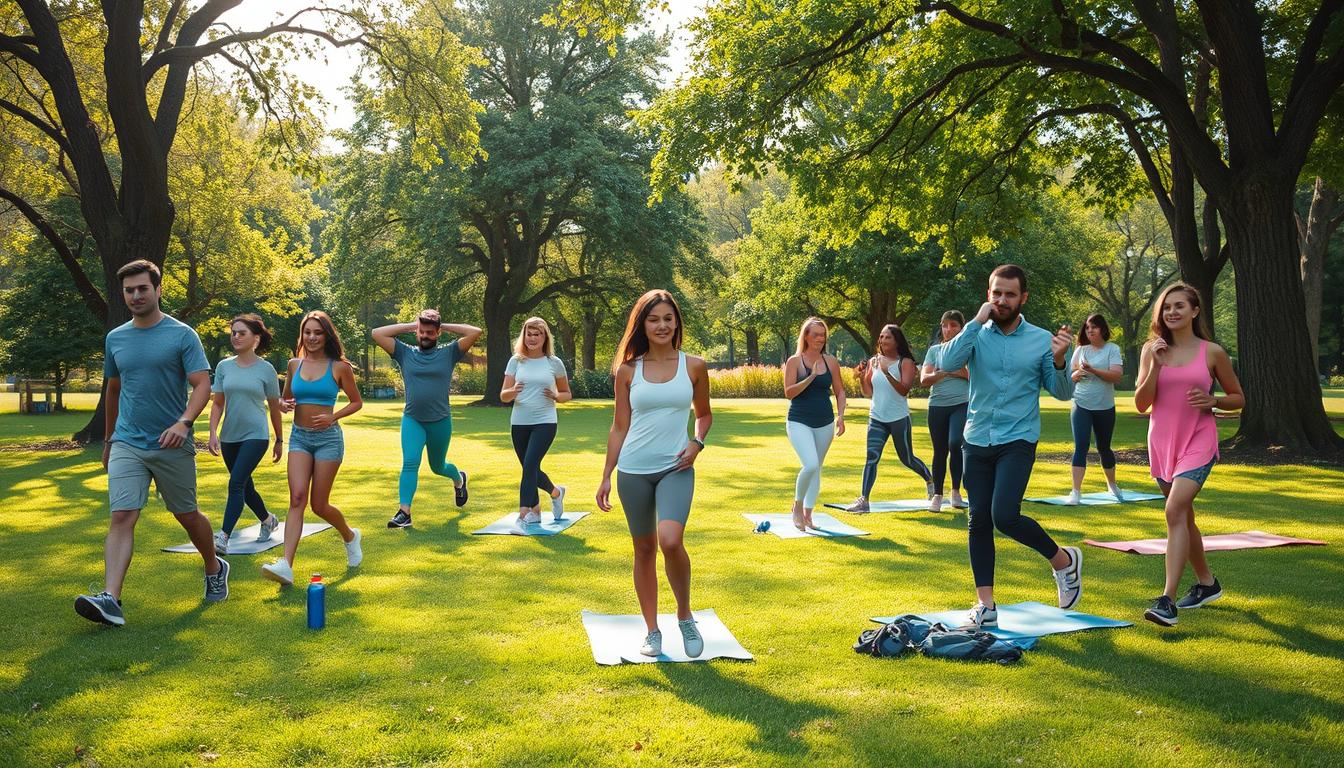
Starting a fitness journey can seem overwhelming. But, the secret to success is taking small, consistent steps. Your Fitness Goals might be to lose weight, build muscle, or boost your Wellness Lifestyle. The goal is to make a routine that feels like a part of your daily life. In this article, we’ll share tips to help you build Healthy Habits that last.
The first step is to start small. Don’t change everything at once. Begin with small, doable changes. This could be a 20-minute workout each day or a brisk walk during lunch. Starting small helps you build momentum and confidence, paving the way for long-term success.
To make a fitness routine stick, make it a natural part of your day. Try different activities and find ones you enjoy. Whether it’s a dance class, strength training, or outdoor adventures, make it fun. When you look forward to it, sticking to your routine becomes easier.
Understanding the Importance of Fitness Goals
Setting clear fitness goals is key to a successful workout plan. Having specific goals gives you direction, motivation, and purpose. Without clear targets, it’s easy to lose focus and drift away from your fitness path.
Tailoring Goals to Your Lifestyle
Effective fitness goals must match your lifestyle and preferences. Take time to understand your daily life, commitments, and likes. This way, you can set goals that are realistic and achievable, avoiding frustration.
Short-Term vs. Long-Term Goals
A good fitness plan balances short-term and long-term goals. Short-term goals, like finishing a 30-day challenge or lifting more, boost your immediate success and keep you motivated. Long-term goals, such as training for a marathon or gaining muscle, offer a future vision to aim for.

By understanding the importance of setting fitness goals and making them fit your needs, you’re on the path to a lasting and fulfilling workout routine.
Setting SMART Fitness Goals
To reach your fitness goals, you need a solid plan. The SMART goal-setting framework is key. SMART means Specific, Measurable, Achievable, Relevant, and Time-bound. It helps you set clear, trackable goals that fit your life and needs.
Specific: Define What You Want
Start by being clear about what you want to achieve. Do you want to lose weight, build muscle, or boost endurance? Knowing your goal helps you stay focused and motivated.
Measurable: Track Your Progress
Make sure your goals are measurable. This lets you see how far you’ve come. You might track your weight, body measurements, or how far you can run. Seeing your progress helps you stay on track and celebrate your wins.
Achievable: Be Realistic
Set goals that are challenging but reachable. Goals that are too hard can burn you out. Goals that are too easy might not excite you. Find a balance that keeps you motivated and on track.
Relevant: Align with Your Life
Your fitness goals should match your lifestyle and priorities. Think about how they fit into your daily life, work, and future plans. This makes your fitness journey meaningful and doable.

Finding Your Fitness Motivation
Starting and keeping up with a Healthy Habits routine can be tough. But finding the right motivation is crucial for success. Whether you want to boost your Wellness Lifestyle or hit a fitness goal, knowing your “why” can give you the push you need.
Discovering Your ‘Why’
Take time to think about what really gets you excited about staying fit. Is it wanting to feel more confident, have more energy, or be a good role model for your family? Knowing your deep reasons can keep you focused and committed, even when it’s hard.
Creating a Vision Board
A vision board is a great way to make your fitness dreams come true. Collect pictures, quotes, and other visuals that show your Healthy Habits goals. Put them somewhere you can see them often. This can be a constant reminder of what you’re aiming for.
Rewarding Yourself
Make sure to celebrate your progress, no matter how small. Treat yourself to something nice, like new workout clothes, or plan a self-care day. Rewards can help you stay positive and keep you going on your fitness path.
Types of Fitness Goals You Can Set
Setting specific, measurable fitness goals is key to a good workout plan. Whether you want to lose weight, build muscle, or boost endurance, having a clear plan is essential. It helps guide your fitness journey.
Weight Loss Goals
For those looking to lose weight, setting goals is motivating. You might aim for a certain weight or body fat percentage. Regular weigh-ins and body measurements help track your progress and make necessary changes.
Strength Training Goals
Strength training is vital for a balanced fitness routine. It helps build muscle and improves physical function. Goals might include lifting more weight, doing more reps, or mastering new exercises.
Flexibility and Mobility Goals
Improving flexibility and mobility boosts performance and reduces injury risk. Setting goals for joint range of motion or stretching milestones is important. It helps focus on this critical fitness aspect.
Endurance Goals
Increasing endurance through cardio or strength training is beneficial for health. Goals like faster running, longer cycling, or longer workouts challenge you. They help measure your progress.
Adaptability is crucial when setting fitness goals. Adjust your objectives as you progress. A diverse set of goals leads to a balanced, sustainable fitness routine.

Building a Balanced Fitness Routine
To reach your fitness goals, you need a balanced approach to exercise. It’s not enough to stick to one type of workout. Mixing different types of exercises is crucial for lasting results.
Incorporating Different Workout Types
Adding variety to your workouts targets different muscle groups and boosts fitness. Include cardio, strength training, flexibility, and balance exercises in your routine. This variety keeps your body challenged and helps you avoid plateaus.
The Role of Rest and Recovery
Rest and recovery are just as vital as exercise. Your body needs downtime to repair and grow stronger. Adequate rest prevents injuries, avoids burnout, and helps your body adapt and improve.
Scheduling Workouts
Sticking to a workout schedule is essential. A consistent routine makes exercise a habit. Try different scheduling methods, like setting specific times or weaving exercise into your daily life.
By mixing workout types, focusing on rest, and scheduling consistently, you create a balanced fitness plan. This supports your long-term goals and overall health.

Overcoming Common Fitness Challenges
Starting a Fitness Goals journey is rewarding, but it comes with challenges. Busy lives and hitting plateaus can test our willpower. Yet, with the right strategies, we can overcome these hurdles and keep moving towards our Healthy Habits.
Dealing with Time Constraints
Finding time to exercise is a big challenge. Work, family, and other duties make it hard to find workout time. The solution is to be creative and fit physical activity into your day. Try walking or biking to work, taking fitness breaks, or doing a quick workout at home during lunch.
Managing Setbacks and Plateaus
Even the most committed can hit a wall. When progress stalls, stay positive and change your approach. Check if your Fitness Goals are still realistic. Try new exercises, celebrate small victories, and remember, consistency is key.
The path to better Fitness Goals and Healthy Habits isn’t always straight. Anticipating and preparing for challenges helps us stay strong and keep moving forward.
Tracking Your Progress Effectively
Keeping an eye on your fitness progress is key to staying motivated. It also helps you tweak your workout plans. There are many ways to track your achievements and keep up with your Fitness Goals.
Using Fitness Apps
Fitness apps are great for tracking your workouts. They let you log your exercises, check your heart rate, and set reminders. Many apps also give you insights to help you see how you’re doing and where you can get better.
Keeping a Workout Journal
Writing down your Fitness Goals and workouts in a journal works too. Note the exercises, weights, and how you feel before and after. This helps you stay on track and notice any patterns or trends.
Regularly Reviewing Your Goals
It’s vital to check your Fitness Goals often. This ensures they’re still right for you and reachable. Review your progress, celebrate your wins, and adjust your Exercise Routines as needed. This keeps you motivated and moving forward.
Cultivating a Support System
Starting a fitness journey can be tough, but having a supportive network helps a lot. You can find a workout buddy or join a fitness group. This system of encouragement and accountability boosts your Physical Activity and Wellness Lifestyle.
Finding a Workout Buddy
Working out with a friend, family member, or coworker who has the same goals is amazing. A workout buddy motivates and keeps you on track. You can push each other, celebrate wins, and reach new levels together.
Joining Fitness Classes or Groups
Being part of a community of people with similar interests keeps you motivated. Fitness classes like yoga, dance, or strength training are great. You learn from experts and get inspired by the group’s energy. You can also find local or online groups that match your interests and goals.
Having a supportive network changes your fitness journey. Whether it’s a workout buddy or a fitness group, it keeps you motivated. It helps you overcome obstacles and reach your Physical Activity and Wellness Lifestyle goals.
Adapting Your Goals Over Time
Starting your fitness journey means your goals might change. What works today might not tomorrow. It’s important to be open to changing your Fitness Goals and healthy habits as you grow.
Recognizing When Change Is Needed
It’s key to regularly check if your Fitness Goals still fit. If they don’t match your life or goals anymore, it’s time to adjust. Feeling stuck or not seeing progress are signs it’s time for a change.
How to Adjust Without Losing Momentum
Changing your Fitness Goals doesn’t mean starting over. It’s vital to keep the progress you’ve made. When you change, do it slowly to avoid feeling like you’ve lost everything.
Being flexible is key to keeping up with fitness. By adjusting your goals as needed, your routine stays exciting and meets your changing needs.
Staying Committed to Your Fitness Journey
Starting a fitness journey is a big step towards a healthier life. But, the real challenge is keeping up the commitment over time. The secret to reaching your fitness goals is being consistent.
The Power of Consistency
Consistency is crucial for any successful fitness plan. It’s not about being perfect but about showing up every day. Making small steps, like working out for 30 minutes or eating healthier, adds up over time.
Celebrating Small Wins
It’s vital to celebrate the small victories on your fitness journey. Every improvement, like better endurance or lifting heavier, is worth celebrating. Recognizing these achievements keeps you motivated and shows you’re on the right path to a Fitness Goals, Wellness Lifestyle.