

























In today’s fast-paced world, taking care of our mental health is key. Many people are finding balance and purpose through spirituality. This article looks at how spiritual wellness helps our mental health. It offers tips on adding spirituality to our daily lives.
The mind-body-spirit connection is key to feeling whole. By focusing on spiritual health, we find peace and self-awareness. This helps us handle life’s ups and downs better. We’ll see how faith and mental wellbeing go hand in hand. A spiritual practice helps us cope and understand our place in the world.
This article shows how to bring spirituality into our daily lives. It covers mindfulness, meditation, and enjoying nature’s beauty. By taking a holistic approach to mental health, we gain purpose and resilience. This leads to a more balanced and fulfilling life.
Understanding the Connection Between Spirituality and Mental Health
Looking into how spirituality and mental health are linked is key for a full wellness plan. The mind, body, and spirit working together is vital for a balanced life. By focusing on this connection, people can see the big benefits spirituality brings to their mental health and happiness.
Exploring the Mind-Body-Spirit Relationship
Humans are complex, made up of physical, mental, and spiritual parts. Many studies show how spirituality can change the mind and body. When people practice spiritual acts like meditation or prayer, they feel more peaceful and emotionally strong.
This connection between the mind, body, and spirit can change lives. It helps people find purpose, bounce back from tough times, and feel more satisfied with life.
The Importance of Holistic Well-being
For good mental health, we need to look at the whole person – body, mind, and spirit. Understanding how these parts work together helps us use spirituality in our everyday life. This way, we can tackle mental health issues at their core, not just the symptoms.
By seeing life this way, we can live more balanced, strong, and happy lives.
Spirituality as a Coping Mechanism
Life can be tough, but spirituality can be a powerful way to cope. It helps us find inner strength and purpose. This way, we can handle hard times better.
Spirituality also helps us find meaning in tough situations. It makes us feel emotionally better and connects us to ourselves and others.
Finding Meaning and Purpose in Adversity
When things get hard, spiritual beliefs and practices can show us a bigger picture. They help us see our lives and experiences in a new way. This can give us hope and the strength to keep going.
Using spiritual strategies can make us more resilient. It helps us see challenges in a positive light. By using our inner strength and connecting with others, we can grow and find purpose in our struggles.
The Healing Power of Spiritual Practices
Exploring spirituality and mental health shows us how spiritual practices can heal us. These activities come from many cultures and religions. They can change how we feel and think, making us healthier.
Meditation is a popular spiritual practice. It helps quiet the mind and focus on the now. Meditation lowers stress, anxiety, and depression. It brings peace and strength inside, helping those with mental health issues.

Prayer and rituals are also healing. Saying mantras, lighting candles, or joining in religious ceremonies connects us to something big. This feeling of connection gives us meaning and purpose. It helps us find peace and new views during tough times.
Adding spiritual practices to our daily life can change us. By using spirituality for healing, we find new ways to be strong, peaceful, and understand ourselves better.
Wellness: Incorporating Spirituality into Your Daily Routine
Looking after your spiritual health can greatly improve your overall health and happiness. Adding daily spiritual activities to your routine helps you connect more deeply with yourself and the world. Here are some easy ways to bring spirituality into your everyday life.
Mindfulness and Meditation Techniques
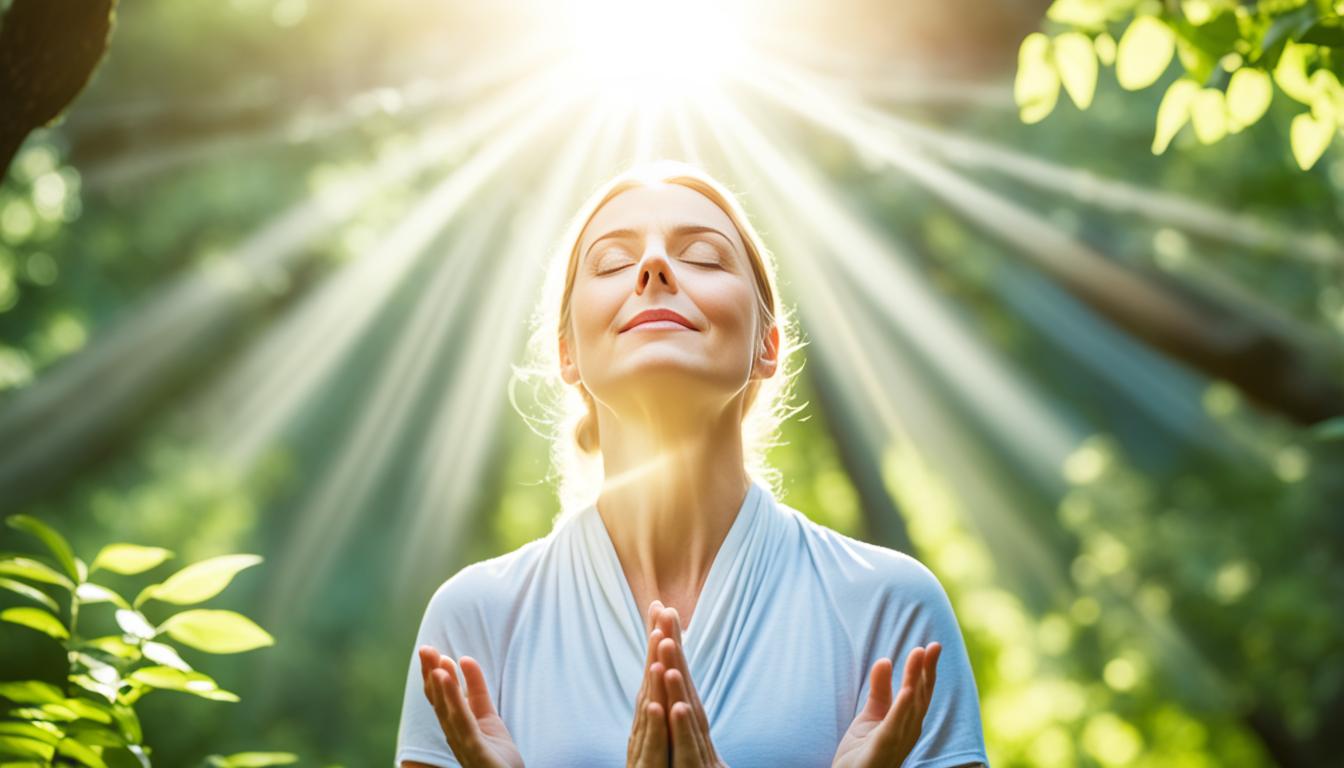
Mindfulness and meditation are great for growing spiritual awareness and peace. Begin your day with a short meditation, focusing on your breath and now. This simple act makes you feel stable, centered, and more in touch with your life’s flow. Try different meditation methods, like guided visualizations or loving-kindness meditations, to see what suits you best.
Connecting with Nature and Appreciating Beauty
Being in nature can be a spiritual journey. Take a mindful walk outside, enjoying the beauty around you. Notice the colors, sounds, and textures, staying fully in the moment. Take time to smell a flower, feel the breeze, or listen to birds sing. These actions help you feel amazed, curious, and respectful towards nature.
By adding daily spiritual practices like mindfulness, meditation, and nature connection, you can improve your well-being and balance. These simple yet strong activities keep you grounded, centered, and linked to the sacred in everything.
The Role of Faith Communities and Support Groups
Having a strong sense of community and belonging is key for good mental and spiritual health. Faith communities and support groups offer a place where people can find comfort, connect with others, and find purpose.
Being part of faith-based or spiritual support groups can greatly improve mental health. These groups create a safe space for sharing experiences, getting advice, and doing activities that help the mind, body, and spirit. They help reduce feelings of loneliness, sadness, and worry that come with mental health issues.
Building a Sense of Belonging and Social Connection
Being in a faith community or support group makes people feel they belong and connected. This is very helpful for those facing mental health problems. It gives them a supportive network and a new purpose. By doing things together, like rituals and talking, people feel a strong bond and friendship that boosts their well-being.
Studies show that being active in faith communities or support groups leads to more happiness, less depression, and a stronger sense of meaning. These benefits come from the strong social ties, emotional support, and shared values in these groups.
Integrating Spirituality into Mental Health Treatment
Mental health experts now see the value of adding spirituality to treatment plans. This approach looks at the mind, body, and spirit together. It helps patients find a full way to heal and feel better. By using spiritual practices, people can see how spirituality affects their mental health.
Working with Mental Health Professionals
When seeing a therapist or counselor, it’s important to talk about your spiritual beliefs. This helps the professional understand what you need spiritually. They might suggest things like meditation or prayer to go along with other treatments.
Adding spirituality to mental health care has many benefits. It can make you feel more connected and give you a sense of purpose. It can also help you handle tough times better. People who try this often feel closer to themselves and others, and to something greater.

It’s key to make sure the spiritual part of treatment fits what the patient believes in. Mental health workers make sure the spiritual part of care matches the patient’s values and culture. This makes it safe and supportive for exploring spirituality.
Overcoming Challenges and Stigma
Adding spirituality to mental health can be tough and may bring stigma. Yet, with an open mind, we can get past these hurdles. This helps make a place where spiritual wellness is accepted and respected.
Embracing Diversity and Respecting Individual Beliefs
One big challenge is fighting stigma and wrong ideas about certain beliefs or practices. It’s key to accept and respect all kinds of spiritual beliefs. This way, we make a safe place for people to be themselves spiritually without fear.
There are also issues with understanding and acceptance in communities and health care. We need to work together to teach, spread awareness, and talk openly. This helps fight the stigma and lets people bring their spiritual beliefs into their health care.
Respecting spiritual diversity means knowing that everyone is different. People have their own spiritual needs and likes. By understanding and meeting these needs, we make a place where everyone can feel welcome to add spirituality to their mental health care.
The Science Behind Spirituality and Mental Health
For a long time, people have been curious about how spirituality affects mental health. Now, science has given us strong proof of this link. Studies show the big benefits of spiritual practices for our minds.
Researchers have looked into how spirituality changes our brains. They found that activities like meditation or prayer can make certain brain areas work better. These areas are linked to feeling happy, less stressed, and clear-headed.
This can lead to fewer symptoms of anxiety, depression, and post-traumatic stress disorder. It’s like our brains are getting a boost from spirituality.
Studies also show how spirituality affects our bodies. They found that spiritual activities can make our heart rate, blood pressure, and stress hormones go down. This is good for both our mental and physical health.
As we learn more, it’s clear that the link between our mind, body, and spirit is key to feeling whole. By using what science tells us, we can make our mental health better. This leads to a more balanced and happy life.
Cultivating Spiritual Well-being for a Balanced Life
Living a balanced life means taking care of our body, mind, and spirit. Spiritual wellness is key to finding meaning and peace in our busy lives. It helps us connect with ourselves and others deeply.
Adding spiritual practices to our daily life helps us feel more connected. It makes us stronger and more resilient. This way, we can handle life’s ups and downs with ease.
Our body, mind, and spirit are closely linked. Taking care of all these areas helps us feel whole and balanced. This might mean meditating, being mindful, or doing creative activities that bring us closer to our true selves.
Finding spiritual wellness is a personal journey. Everyone is different, so what works for one person might not work for another. The important thing is to keep an open mind and try new things. This can lead to a more balanced life and deep happiness.
The Intersection of Spirituality and Mental Health Across Cultures
Spirituality and mental health have always been connected. Different cultures worldwide have shown us how the mind, body, and spirit are linked. It’s key to see how culture shapes our view of this bond.
Exploring Diverse Spiritual Traditions and Practices
Eastern philosophies like Hinduism, Buddhism, and Taoism, and indigenous spiritual practices, show us the world’s spiritual diversity. Each tradition gives us new ways to think about how spirituality helps our mental health. For instance, Buddhism’s mindfulness has been shown to lower stress, anxiety, and depression.
In India, Ayurvedic medicine teaches us to balance the mind, body, and spirit for health. This shows how spirituality is key to well-being.
Many cultures believe that spiritual acts like meditation, prayer, and rituals help us grow and find peace. By looking into these traditions, we learn about the deep link between spirituality and mental health.
In today’s complex world, the wisdom from these cultures reminds us to value our spiritual and cultural roots. This helps us seek overall well-being.
The Future of Spirituality and Mental Health: Trends and Possibilities
The world of mental health is changing, and spirituality is becoming more important. Trends show a focus on overall well-being, including the mind, body, and spirit. Experts are finding new ways to use spiritual practices like meditation in traditional treatments. This approach helps patients heal and become more resilient.
Technology is changing how we think about spirituality and mental health. Now, digital tools and apps make it easy to find spiritual guidance at home. This mix of tech and spirituality could change how we handle mental health. It offers new tools for personal growth and self-discovery.
The future looks bright for combining spirituality and mental health. As studies show the benefits of spiritual practices in wellness programs, we’ll focus more on the mind-body-spirit connection. This could lead to new, effective ways to deal with mental health issues. It could change how we see and tackle the challenges of being human.